
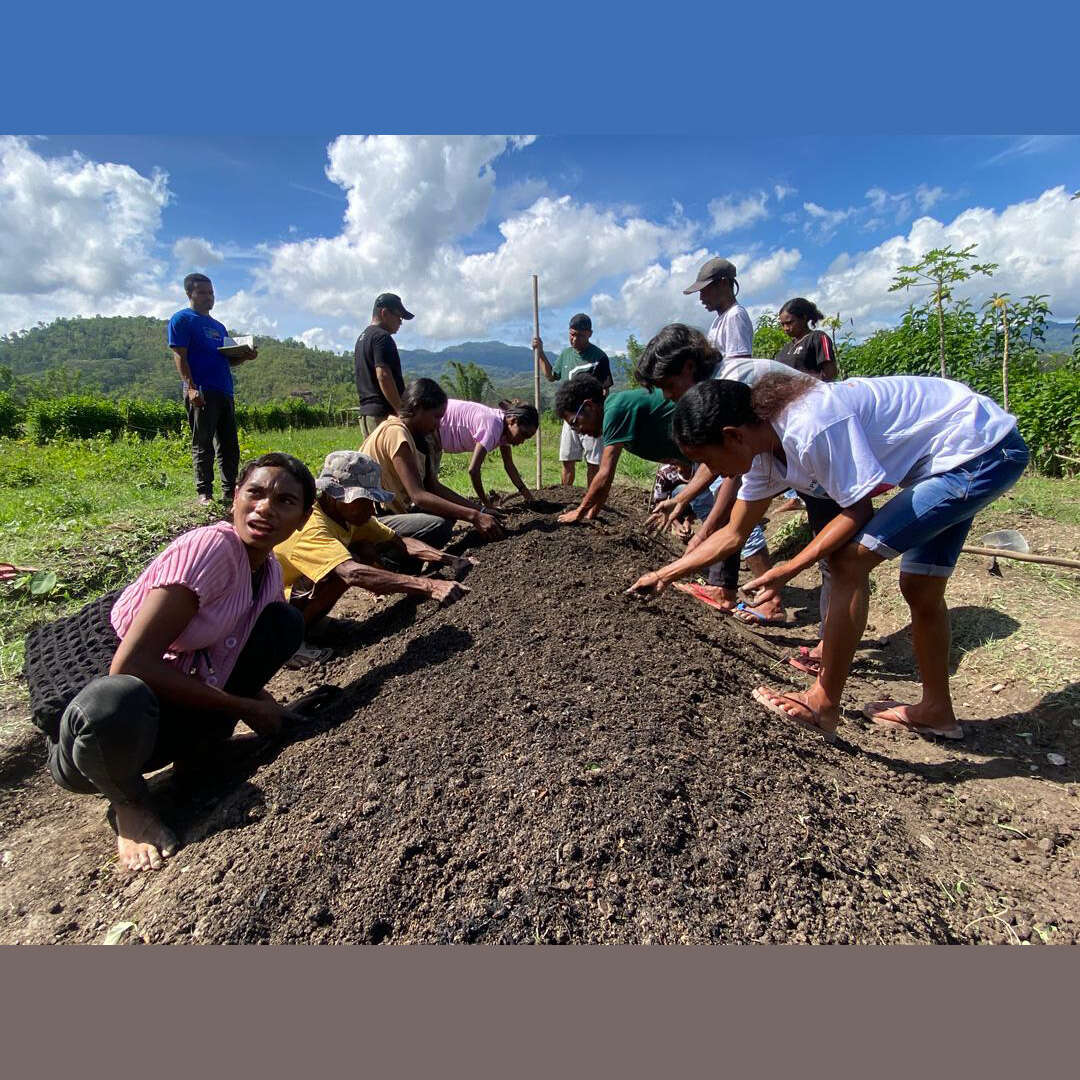
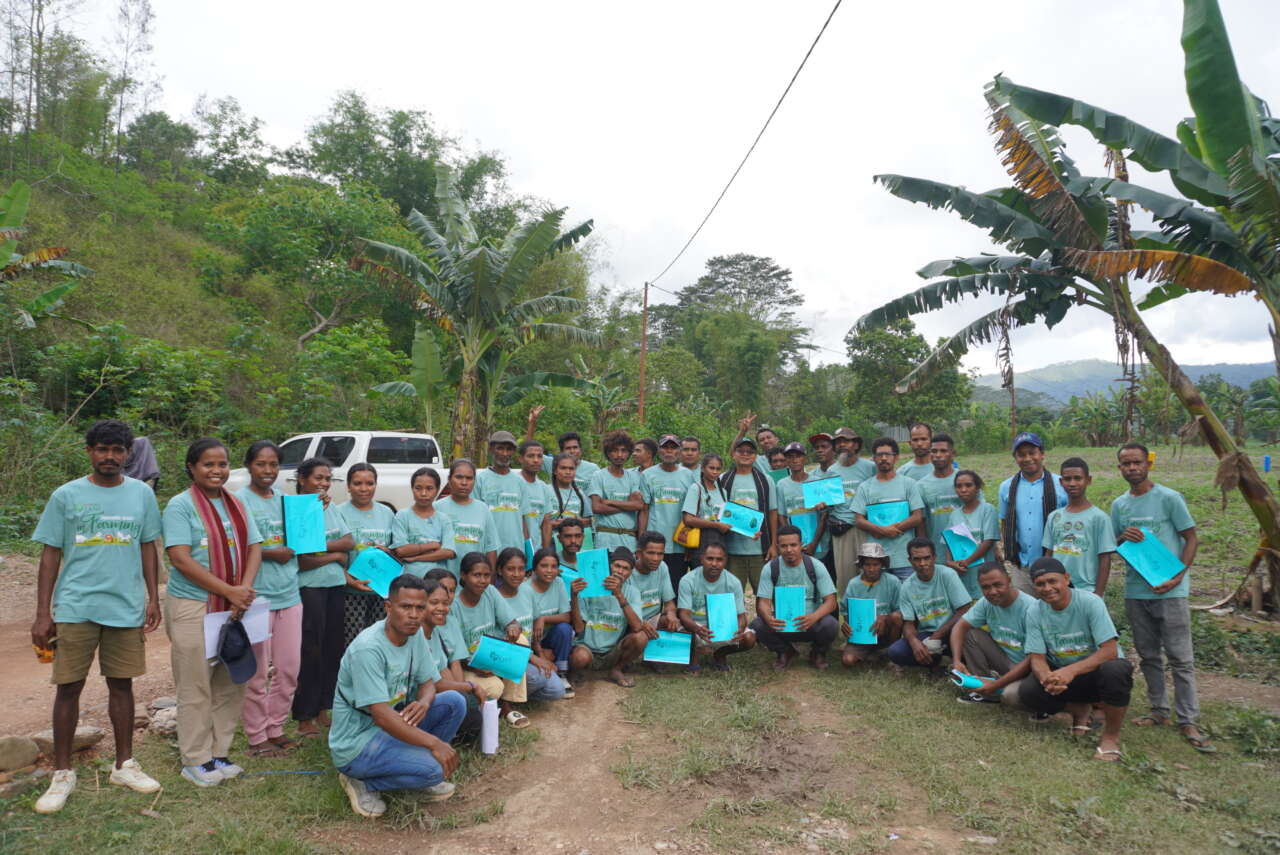
From November 29 to December 3 in Ermera, farmer groups from various villages from Railaco, Ermera and Aileu – Tarmasoru, Darema, Toilesu, Tabulasi, Aslimhati, and Hialmeta – participated in an agricultural training program facilitated by Br. Dien, SJ Director of the Agricultural Course Center at KPTT (Kursus Pertanian Taman Tani), Salatiga, Indonesia. The theme for the training was: “Finding God in Farming.”
A way to reach God
In collaboration with the Food Security Program of Jesuit Social Service, this activity aimed to strengthen farmers’ skills, particularly in soil preparation, soil care, and biodiversity management, to help increase productivity. The formation went beyond agricultural techniques. It also emphasized building good character and discipline, especially from a Christian perspective. Participants were invited to see agriculture as a means to reach God – recognizing that cultivation, patience, and sacrifice in farming mirror the journey of Jesus Himself. Br. Dien, SJ referenced the example: “Just as Jesus sacrificed and carried the cross with patience for the resurrection and salvation of humanity”, in farming, we too do not expect a good harvest if our work is without patience, hard work and sacrifice.
According to Br Dien, SJ, “Farming is very easy, if the character is already built. That’s why I mentioned in the first meeting with them (the training participants), what Japanese farmer Masanobu Fukuoka said: ‘the ultimate goal of farming is not growing crops, but cultivation and perfection of human beings’”. Br Dien further emphasized, “the important thing is that the human first should be cultivated and should be perfect. People should have discipline, commitment, and responsibility”.
Farming for the future generation
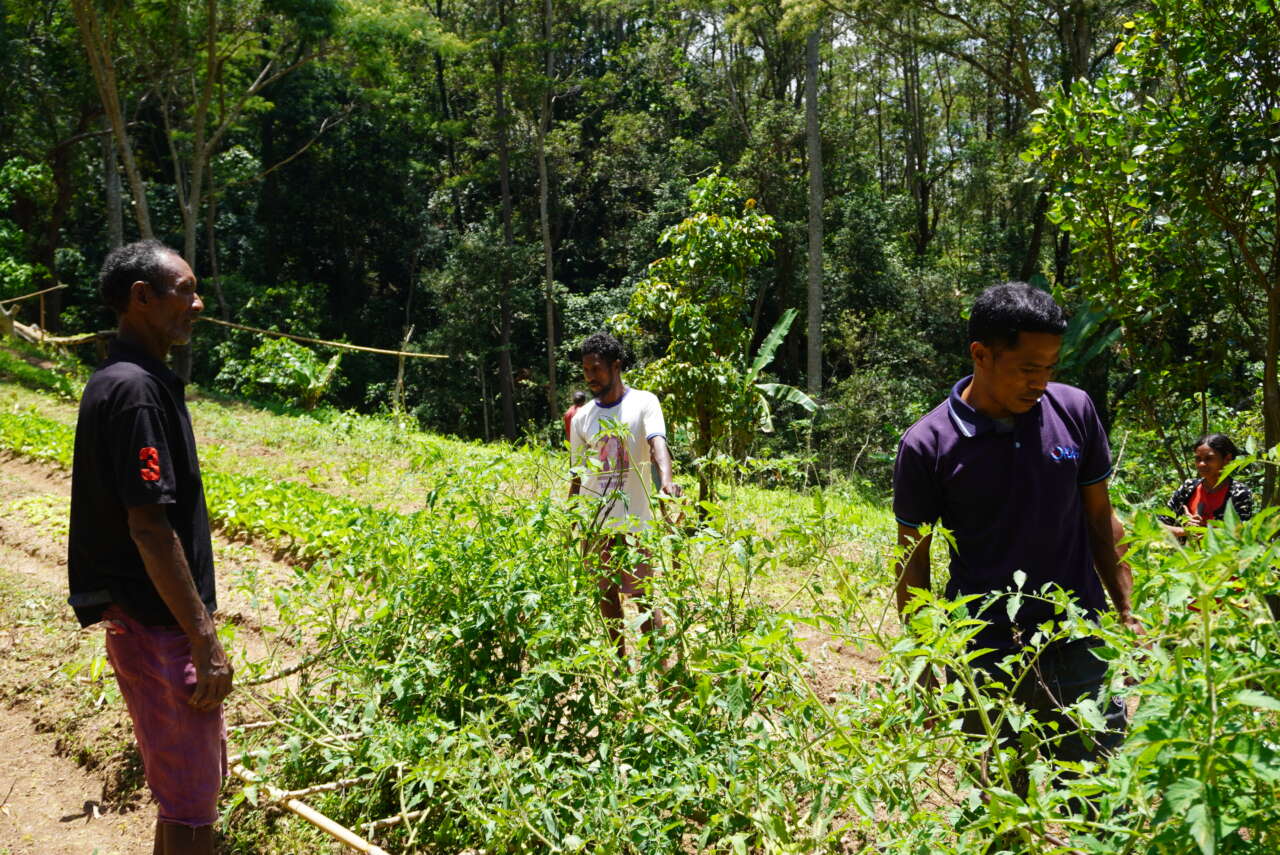
Most of Timor-Leste’s population relies on agriculture as their primary source of livelihood, income, and food security. Although farming has been practiced for generations, many communities continue to face limitations in agricultural knowledge. This can be seen directly in the condition of farmlands, such as poor soil fertilization, planting without proper beds, lack of irrigation systems, all this resulting in low productivity and susceptibility of harvest failure.
This training provided participants with updated knowledge and practical skills to improve their farming techniques and strengthen their resilience. Pedro Soares de Fatima, one of the participants, reflected:
“This training feels like the best school for us. We learn, we practice, and we become better not only for ourselves but also for future generations.”
The strong interest from the community demonstrated how significant this training was. According to Cornelio, Food Security Program Officer, “The participation of our beneficiaries was bigger than our target. The expected participants were 30 people, but the actual number was over 50.” In total this program trained 52 beneficiaries, 26 males and 26 females from four different farm groups.
During the four-day training, participants learned how to prepare different types of organic compost for soil fertilization, create alternative pesticides, apply grafting techniques to improve crop quality, and use the business canvas model to design their own agricultural business plans.
Cornelio shared the personal impact of the training:
“I learned a lot from Br. Dien. Earlier on, I only used my own experience to guide our beneficiaries. With these new skills, I can now organize and facilitate trainings more effectively. And I also want to apply this knowledge to my own small farm to help my family access nutritious food”.
Hopes for the future
Everyone in this collaborative training expressed hopes for the future that this program will continue. They believe it can benefit not only their institutions but also many communities across Timor-Leste. With ongoing opportunities like this, farmers can enhance their knowledge, strengthen the agricultural sector, improve productivity, increase resilience and sustainability, and reduce the risk of harvest failure. Thus, participants were encouraged to share and apply what they had learned with their own communities, helping to spread improved farming practices throughout the region.
Written By: Reti Laura, Jesuit Social Service (JSS-TL), Communications Officer