
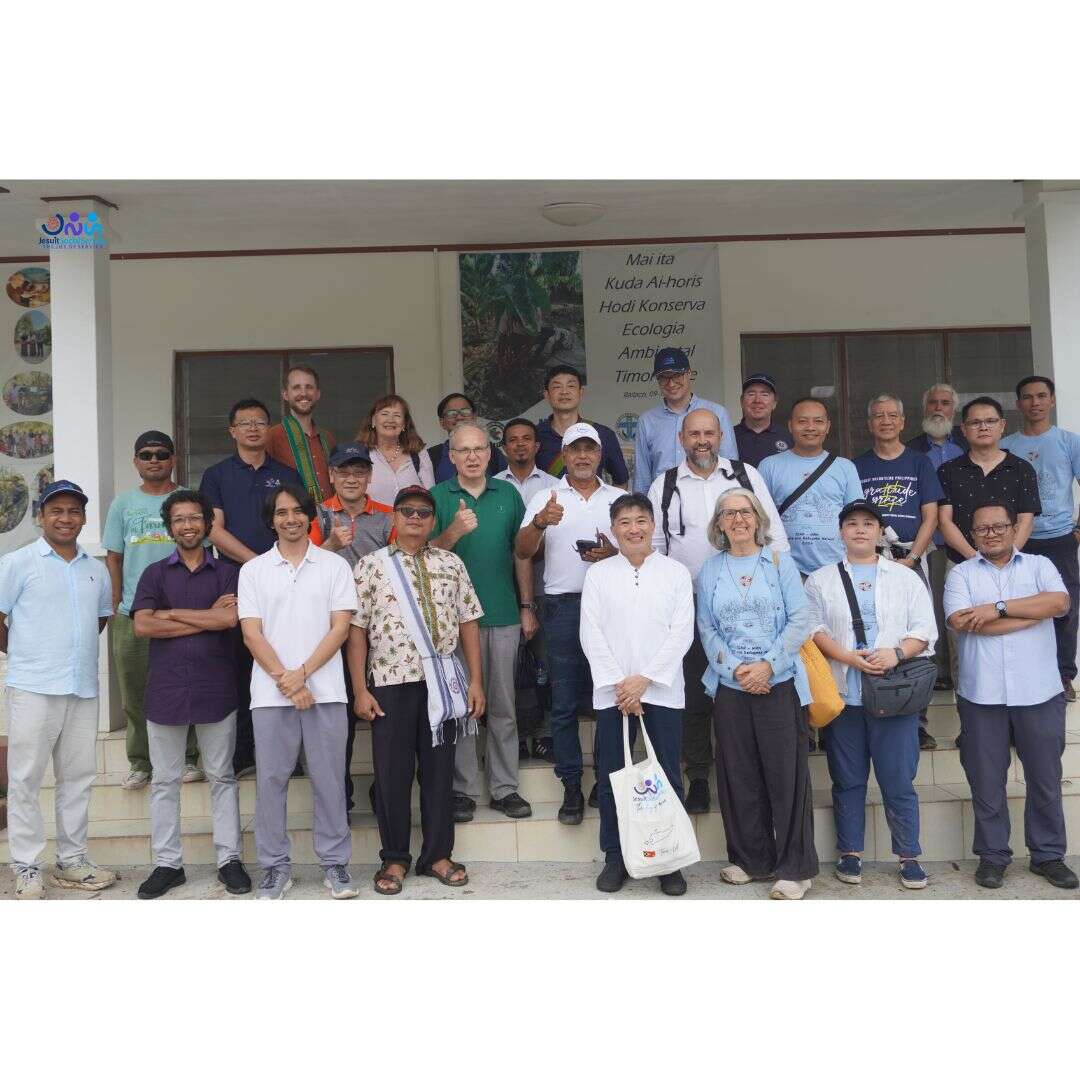
From March 3rd to 9th, 2026, Timor-Leste hosted two important gatherings within the Jesuit Conference of Asia Pacific (JCAP): the Migrant and Refugee Network (MRN) meeting from March 3rd to 6th, followed by the Social Ministry meeting from March 6th to 9th, with one merged session in between. These meetings brought together Jesuits and lay collaborators from across the Southeast Asian region to reflect on the growing reality of migration and displacement caused by climate change. What was once an emerging concern is now an urgent issue that calls for action.
The gathering served as a collaboration between the Migrant and Refugee Network and the Ecology Network (Reconciliation with Creation), focusing on the interconnected challenges of climate displacement and migration in the region, and particularly in Timor-Leste.
JCAP is the most culturally diverse among the Jesuit Conferences. While this diversity can present challenges, it is also a strength as we seek unity in diversity and deepen our shared mission.
Collaboration has always been our way of proceeding when addressing complex and integrated issues like this. Yet the question remains: how can we collaborate better and more effectively? How can we live out the call to the Magis?
In his welcome remarks, Fr. Erik John SJ, Superior of the East Timor Jesuit Region, reminded the participants of the importance of solidarity in mission, saying, “Your presence assures us that we are not alone in this mission.”
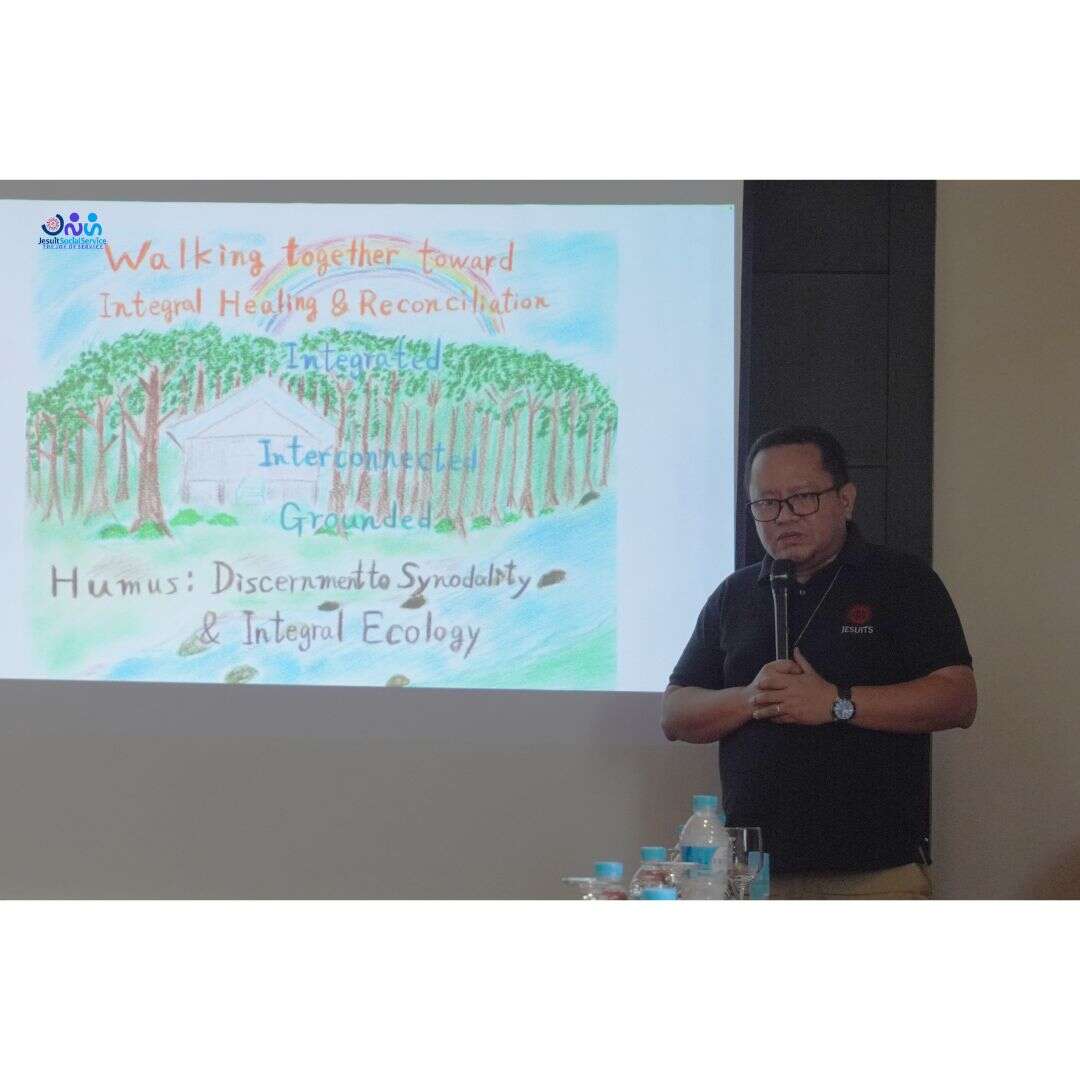
Photo: Fr. Erik John, SJ in his welcoming remark, behind is the “ecology drawing” by Fr. Jun Nakai, SJ.
In his opening address for the MRN meeting, Fr. Jun Viray SJ, quoted Gandalf from The Lord of the Rings: “All we have to decide is what to do with the time that is given to us.” The quote served as a timely reminder of the responsibility shared by everyone present.
Fr. Jun Nakai SJ, the convenor of the Migrant and Refugee Network, helped frame the purpose of the meeting through the image of the Ecological Drawing. This reflection invited delegates to envision our shared horizon as we Walk Together toward Integral Healing and Reconciliation. In this image, each institution is like a tree within a forest—grounded, interconnected, and integrated. The humus that nourishes and sustains this forest—discernment, synodality, and integral ecology—also shapes our way of proceeding.
Throughout the meeting, speakers from across JCAP as well as local speakers highlighted the urgency of climate displacement and the importance of collaboration in responding to the crisis. They emphasized the need to consider the cultural and social realities of communities when addressing these challenges. Participants explored the issue of climate change and human mobility in Timor-Leste through a wide range of perspectives—from academics and environmental advocates to a former national leader and some former migrant workers. For Timor-Leste, the gathering provided an important opportunity not only to share its own context and experience with the regional network, but also to learn from other countries about climate resilience and adaptation.
During the Social Ministry meeting, Fr. Jun Viray SJ brought participants back to a fundamental question: why do we do what we do? Reflecting on Pope Francis’ Encyclical on ecology, he reminded the group that “we are faced not with two separate crises, one environmental and the other social, but rather with one complex crisis which is both social and environmental.” This reflection reinforced the understanding that the mission to accompany the poor must also be deeply connected to ecological concerns, as the most vulnerable communities are often the ones most affected by the climate crisis.
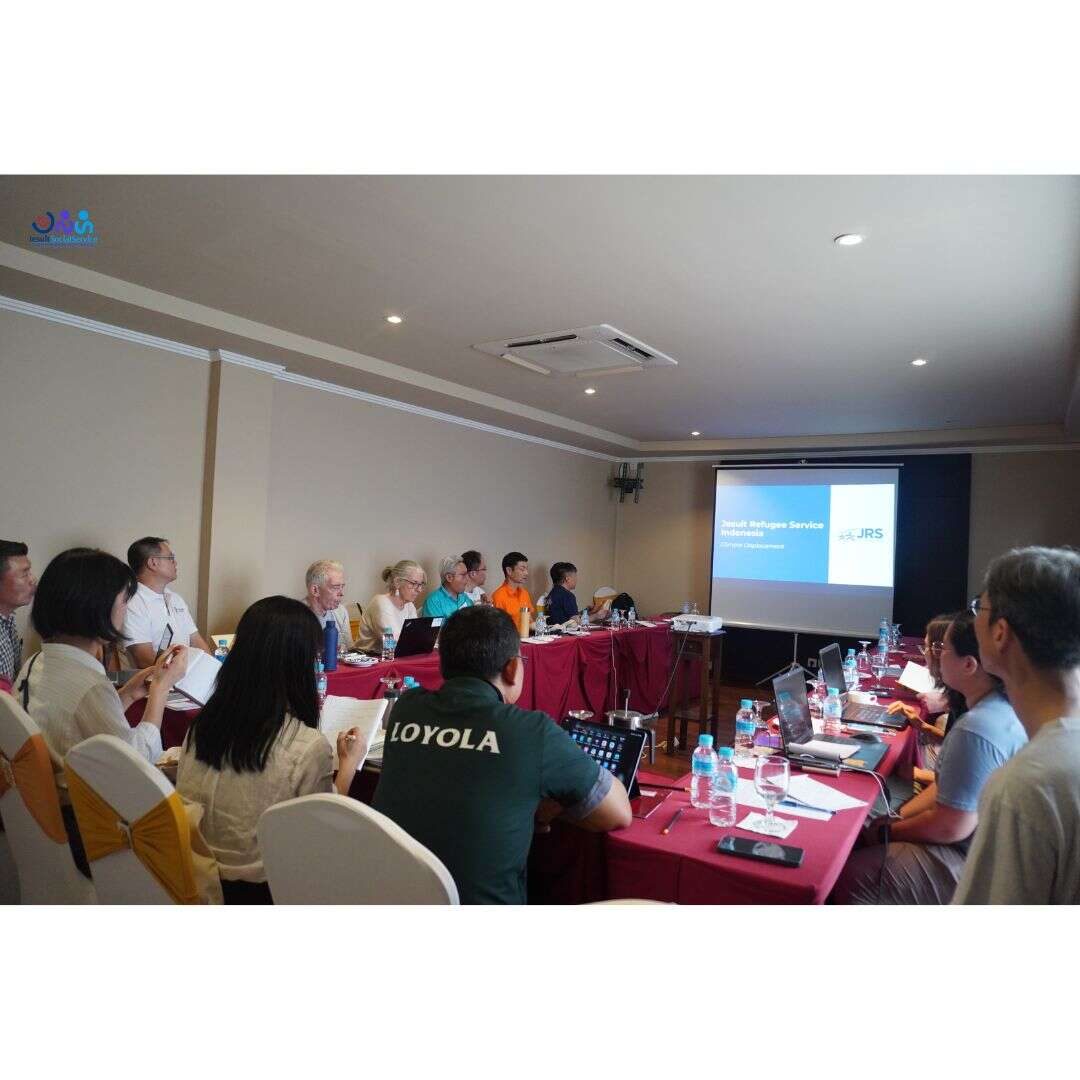
Photo: The participants are in the conference room, preparing for the next topic of the meeting of Jesuits Refugee Service-Indonesia.
The Social Ministry meeting concluded with a Spiritual Conversation, inviting delegates to reflect on the work already being done at the ground level while imagining what the “ecology forest” might look like in ten years ahead. Participants were encouraged to consider how each of them could continue contributing to this shared forest from a grounded, interconnected, and integrated level.
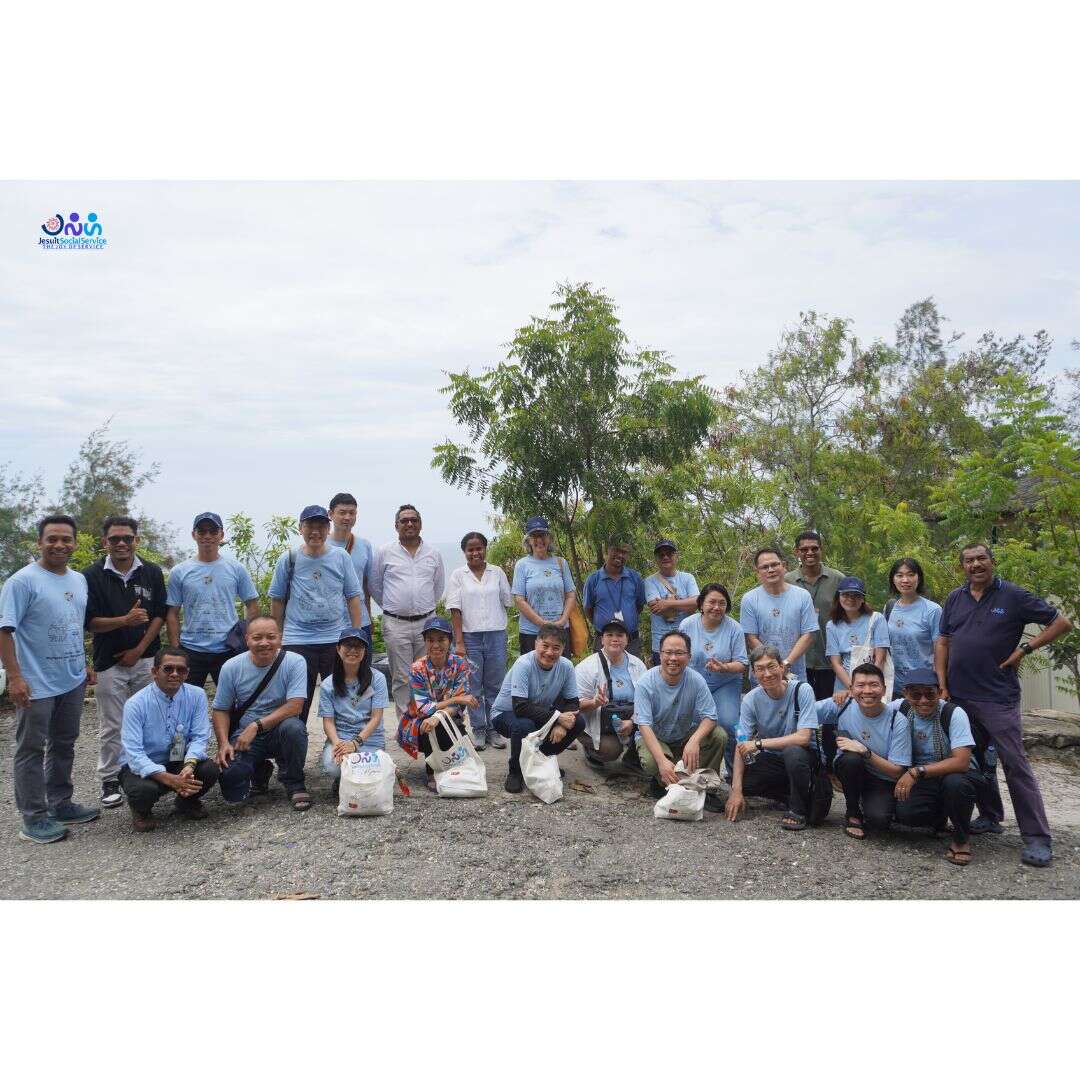
Photo: Social delegates visiting the Jesuits Community in Montserrat-Kasait. On the right is Fr. Joaquim Sarmento, SJ, the superior of the community alongside the Jesuits in the community.
Within the conversation, challenges were acknowledged. Some delegates reflected that “some trees need more care, other big trees need to give shade to the others, and there is uneven distribution of nutrition in the soil.” Others pointed out another important reality: “there are other organisms in the soil that help trees absorb nutrients—fungi and microbes.” These reflections revealed both opportunities and challenges within the network.
Yet hope remained alive. In her closing words, Julie Edwards, the Conference Secretary for Social Ministry, encouraged participants to “keep heart and make our way steadily with trust and a real fire in our belly.”
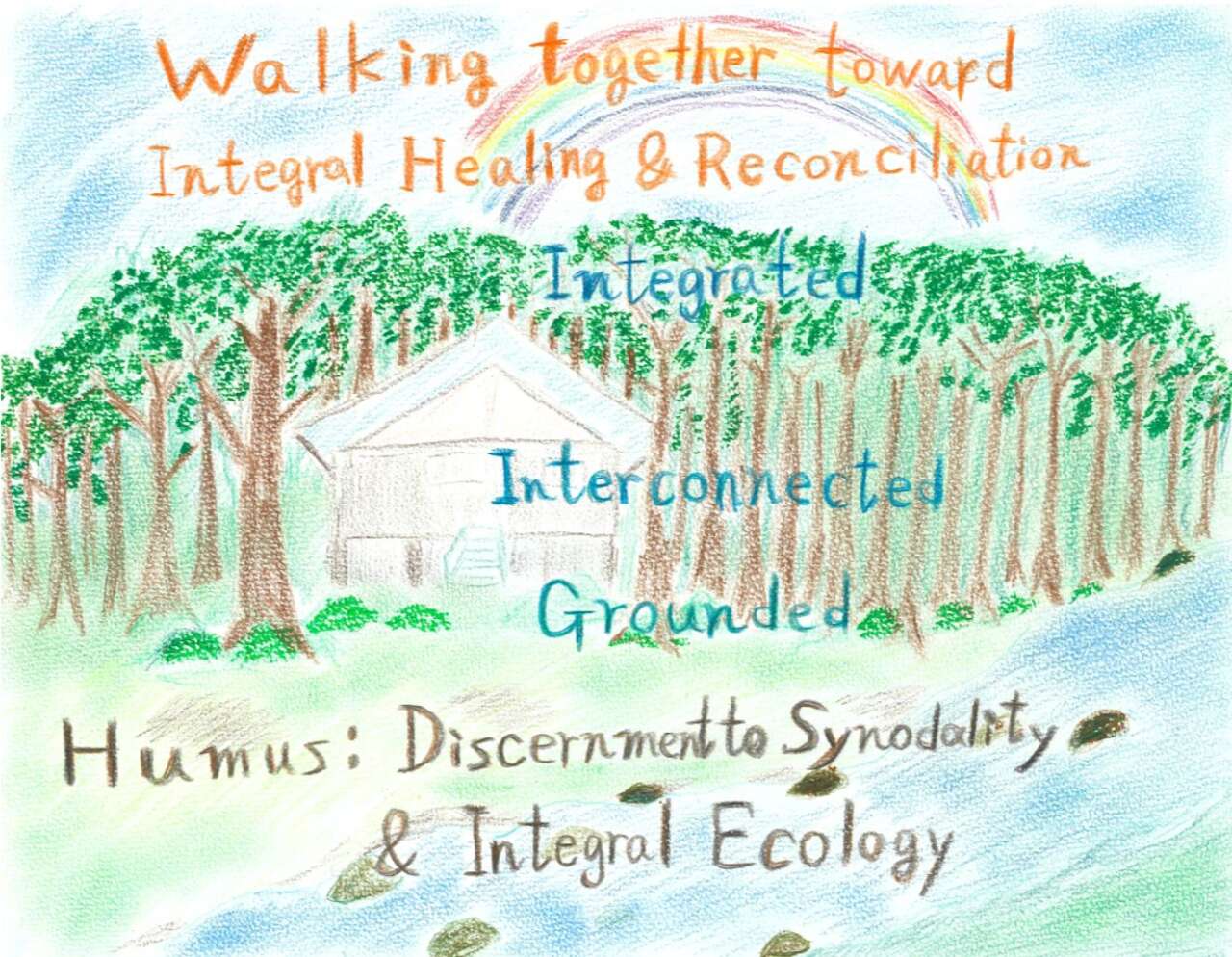
Photo: “ecology drawing” by Fr. Jun Nakai, SJ
Written by: Reti Laura, JSS Communications Officer