The Story of Elvino Da Silva Godinho, CSDO’s Driver
What does it truly mean to be a Jesuit collaborator—and why not simply an employee?
Many people who work alongside the Jesuits understand their service as more than a job. They see it as contributing to the mission for the greater glory of God. But is this way of working still possible in the 21st century?
Through conversations with many collaborators, one thing becomes clear: they feel a strong sense of belonging to the Jesuit apostolic works where they serve. Each day, they share life with people who may begin as strangers but slowly become family within one community.
One of these collaborators is Elvino, who has been serving at Centro Saúde Daniel Ornelas (CSDO) for almost three years. For him, this work is part of God’s mission.
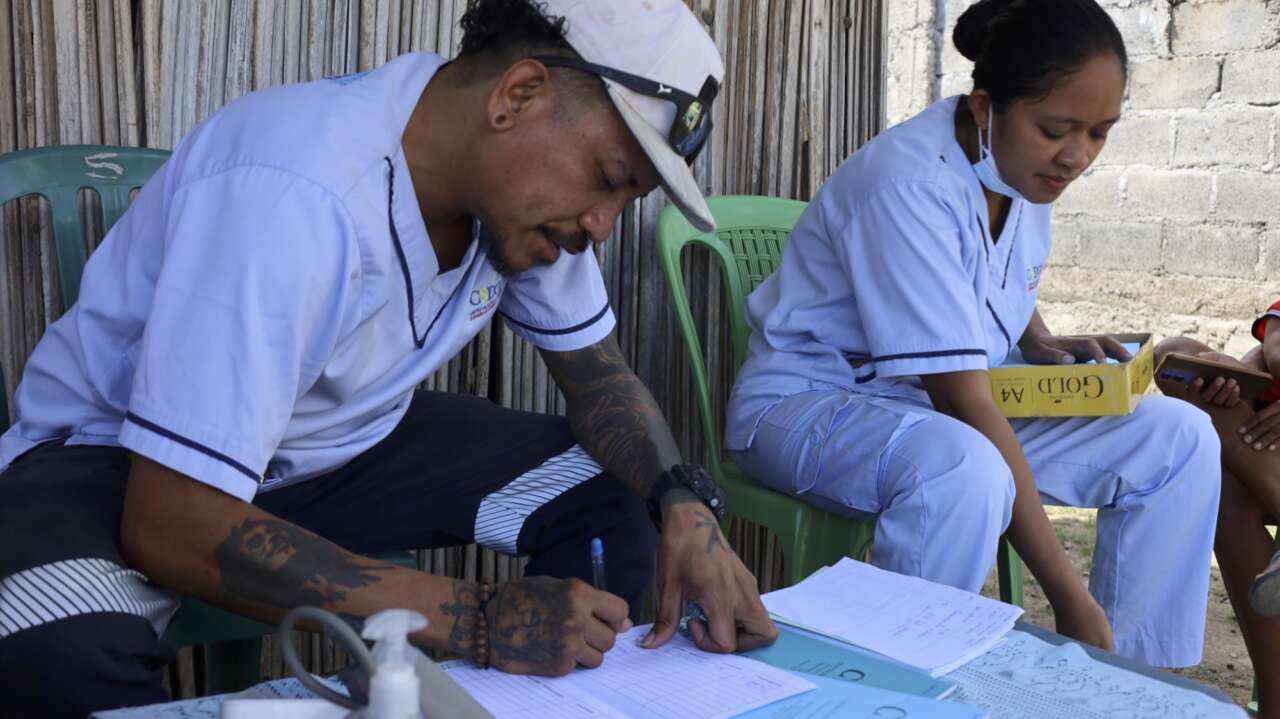
Photo: Elvino helping the team with patient registration.
Answering the Call
In 2024, Elvino lost his job as an ambulance driver. After spending nearly three months at home, a friend informed him about a job vacancy similar to his previous work. The deadline was only one day away, but Elvino immediately applied.
“There was only one day left before the application closed,” Elvino recalled.
“I believed the job fitted my profession because I had five years of experience driving an ambulance at the National Hospital of Timor-Leste, Hospital Nacional Guido Valadares (HNGV).”
Despite his strong experience, Elvino felt insecure about his appearance—his body is covered with tattoos.
“When I passed the selection and went for the interview, I was honest about my tattoos,” he shared. “I knew the Jesuits are a religious congregation, and I would be working closely with priests. I was afraid my appearance might prevent me from getting the job.”
Chosen for Commitment, Not Appearance
God calls people to be His collaborators, and Elvino responded to that call by joining Jesuit Social Service (JSS) at CSDO in Kasait, Liquiça. Although he initially felt uncertain about being accepted, he soon realized that his dedication mattered more than his appearance.
“I was confident in my work experience,” Elvino said. “During the interview, I told Fr. Júlio Sousa, SJ, and José from JSS staff, ‘If you look at my appearance, I might not seem suitable to work with priests.’”
Elvino was deeply grateful to discover that commitment and willingness to serve were what truly mattered.
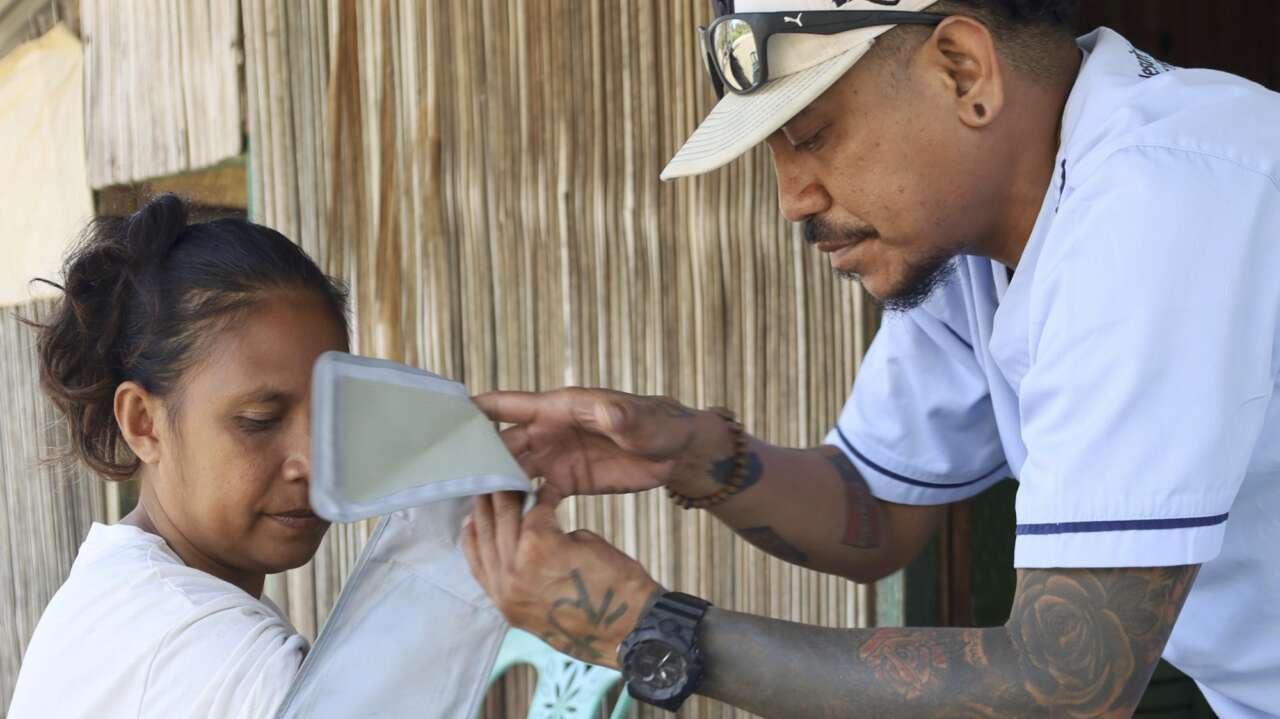
Photo: Elvino is conducting basic health checks, heart rate monitoring, and blood pressure measurements.
Growth Through Mission
Looking back on his time at CSDO, Elvino describes a journey of personal and spiritual growth.
“At first, I thought I would only be driving the ambulance,” he explained.
“But CSDO became a space for learning, growth, and sharing. I feel blessed to work here. My co-workers, Fr. Júlio, SJ, our director—everyone supports each other like family.”
The spiritual formation provided by JSS, including quarterly meetings and recollections and annual retreats, has deeply influenced Elvino’s life.
“My life feels more peaceful now,” he shared. “I have learned how to pray, and my communication with my family has become calmer. We even pray together before dinner—something we never did before I worked here.”
Inspired by this experience, Elvino hopes to enroll his children at Colégio Santo Inácio de Loiola–Kasait (CSIL), a Jesuit education project located across from CSDO.
“I pray that my daughter can study at CSIL,” he said. “I believe the Jesuit environment will help her grow into a better person.”
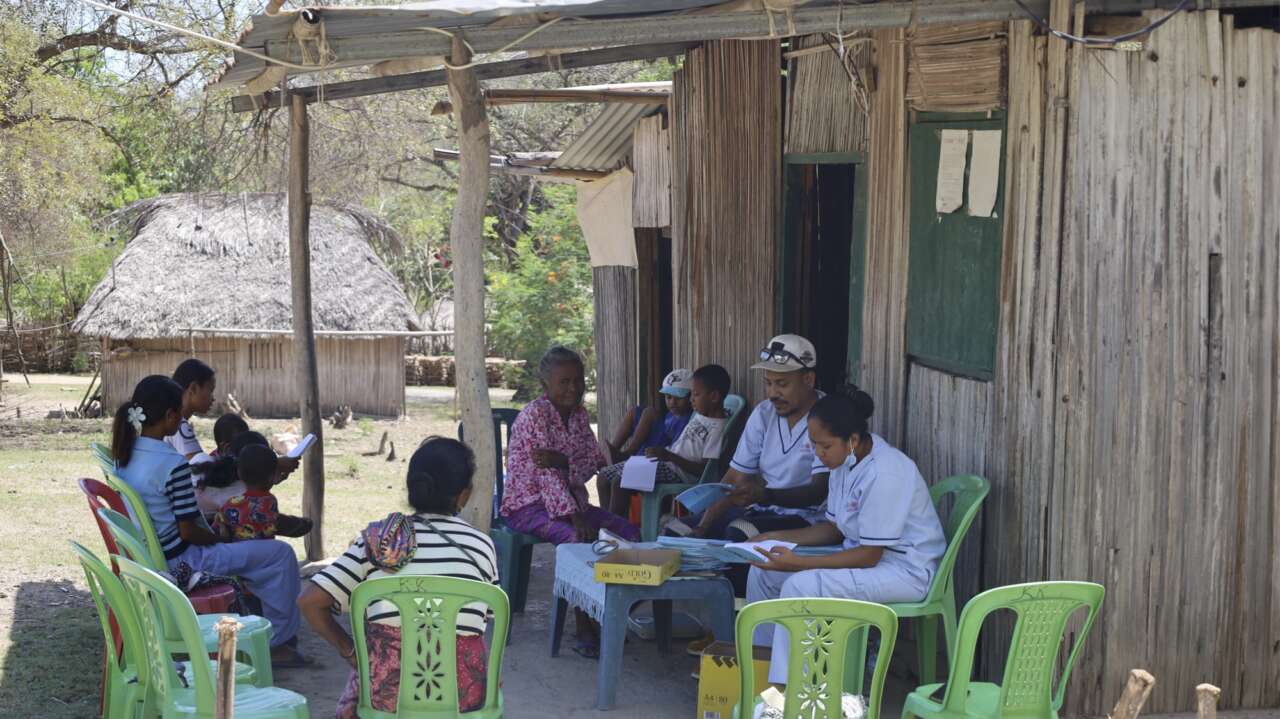
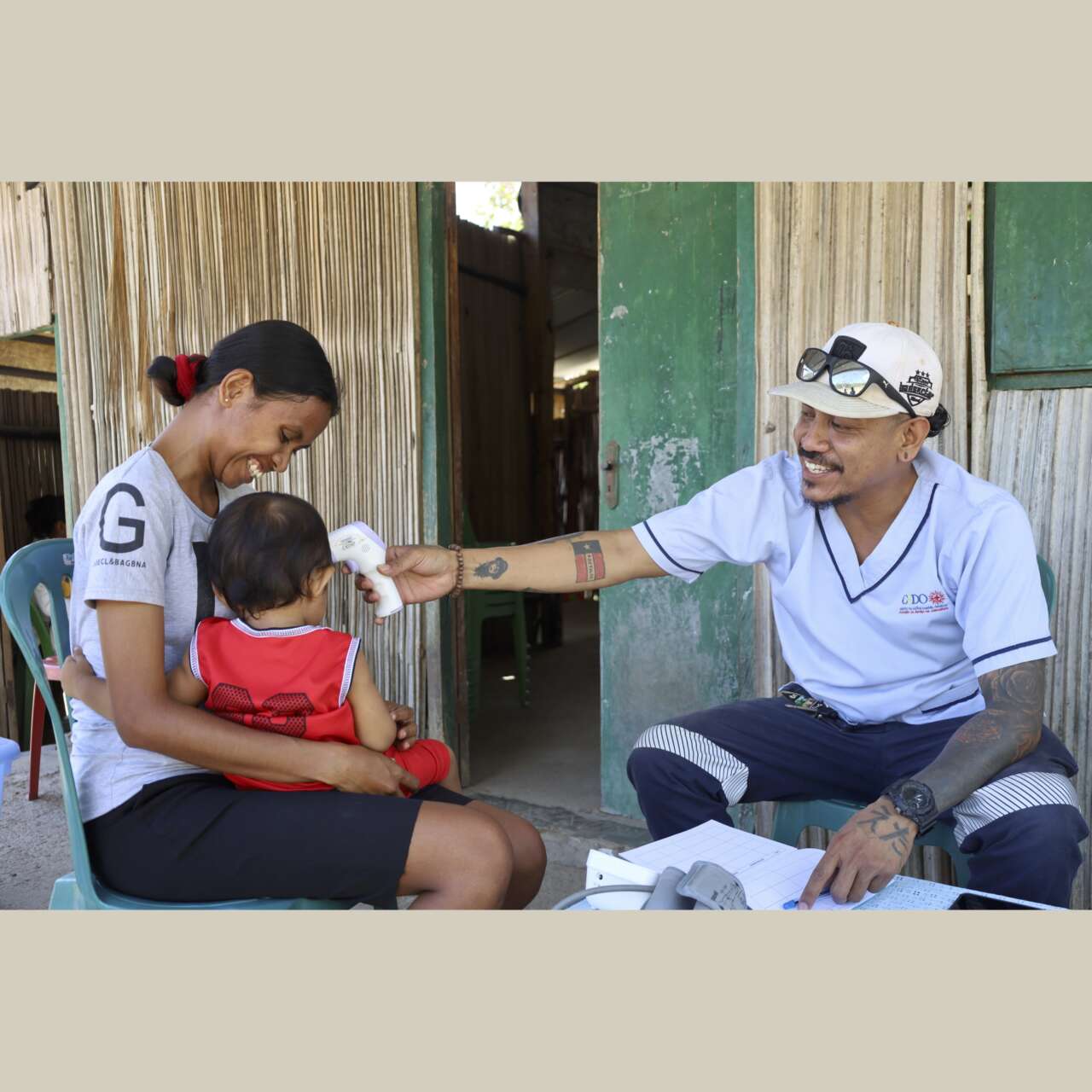
Photo: Elvino and his team (nurse) conducting a basic health consultation for the community in Fatugnala, Ulmera.
Serving Beyond the Clinic
Through his work at CSDO, Elvino has witnessed firsthand the importance of the mobile clinic program, especially for people living in remote areas.
“Programs like the mobile clinic are very important for communities such as Ulmera,” he explained. “People in places like Maubara Ulun and Fatuglana really need access to medical care.”
Participating in mobile clinic visits has changed Elvino’s way of seeing life. “Every time we arrive in a community, people run toward us with smiles and happiness when they see our vehicle.”
He recalls how parents—especially mothers—eagerly bring their daughters for check-ups.
“Many mothers are curious and excited about their health,” Elvino added.
“Because they live far from clinics and hospitals, it is difficult for them to seek medical consultation.”
Elvino’s role in the mobile clinic goes beyond driving. He has also been trained to assist with patient registration, basic health checks, heart rate monitoring, and blood pressure measurements.
“I am happy to learn more and contribute beyond my main role,” Elvino shared. “We are not just co-workers—we are a family on a mission, God’s mission.”
Written by:
Iriana Soares, ETR Communications Officer