
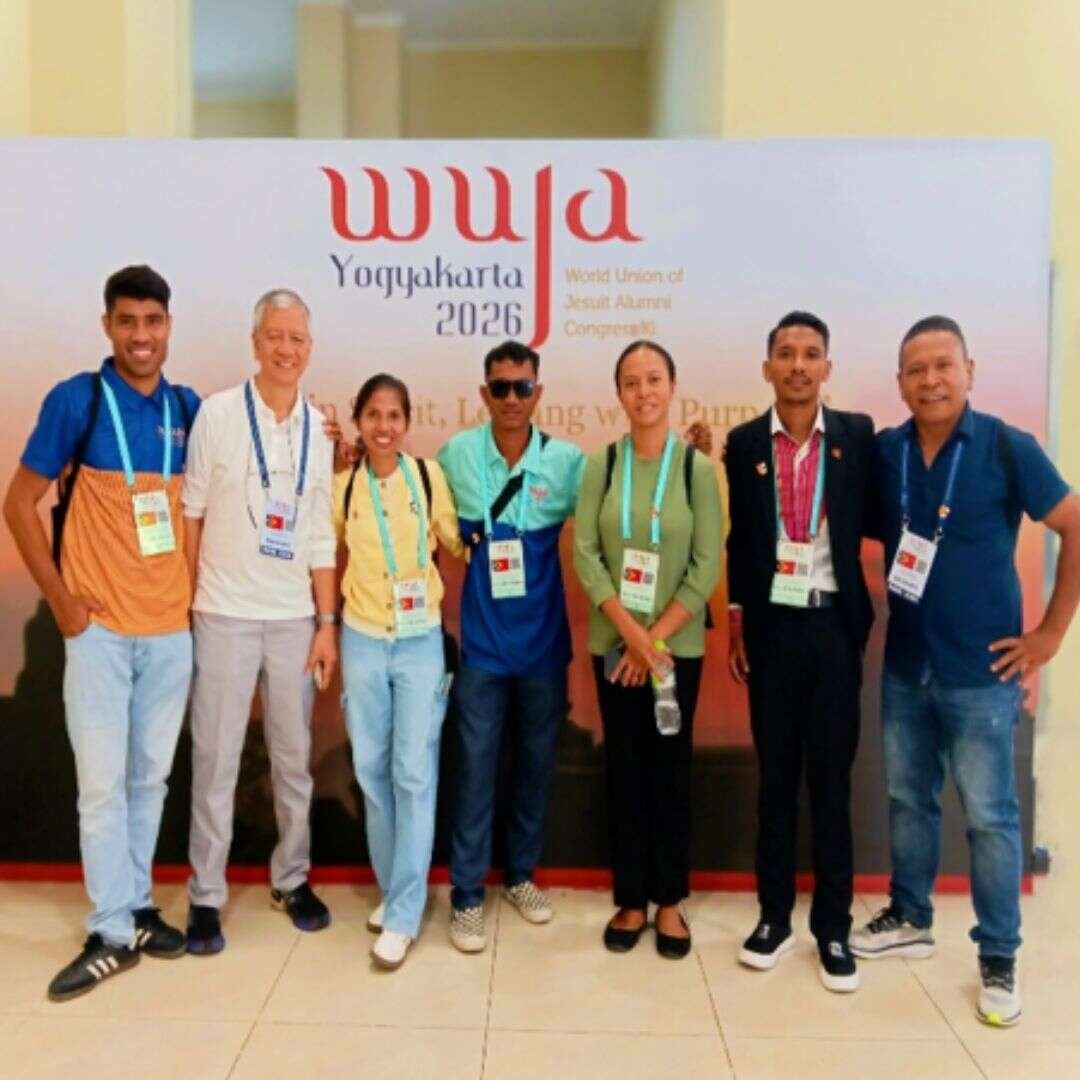
I would like to begin my reflection considering the question: What does it mean to be a Jesuit alumnus? And, more importantly, what can a Jesuit alumnus do to bring people closer to God, transform the lives of others, and bring peace, love, and compassion into the world? These questions may lead us to many possible answers, and perhaps we may not always find accurate ones. Yet, they are important questions to ask because being a Jesuit alumnus is not simply about having graduated from a Jesuit institution. It is also about asking ourselves how we continue to live out the values, spirituality, and mission that we received through our Jesuit education.
I recently had the opportunity to attend the 11th WUJA (World Union of Jesuit Alumni) Congress, held at Sanata Dharma University in Yogyakarta, Indonesia, from 29 July to 3 August 2026. The Congress brought together more than 1,000 Jesuit alumni from different parts of the world. It was a remarkable gathering of people with diverse backgrounds, experiences, professions, cultures, and perspectives, yet united by a shared connection to Jesuit education and spirituality.
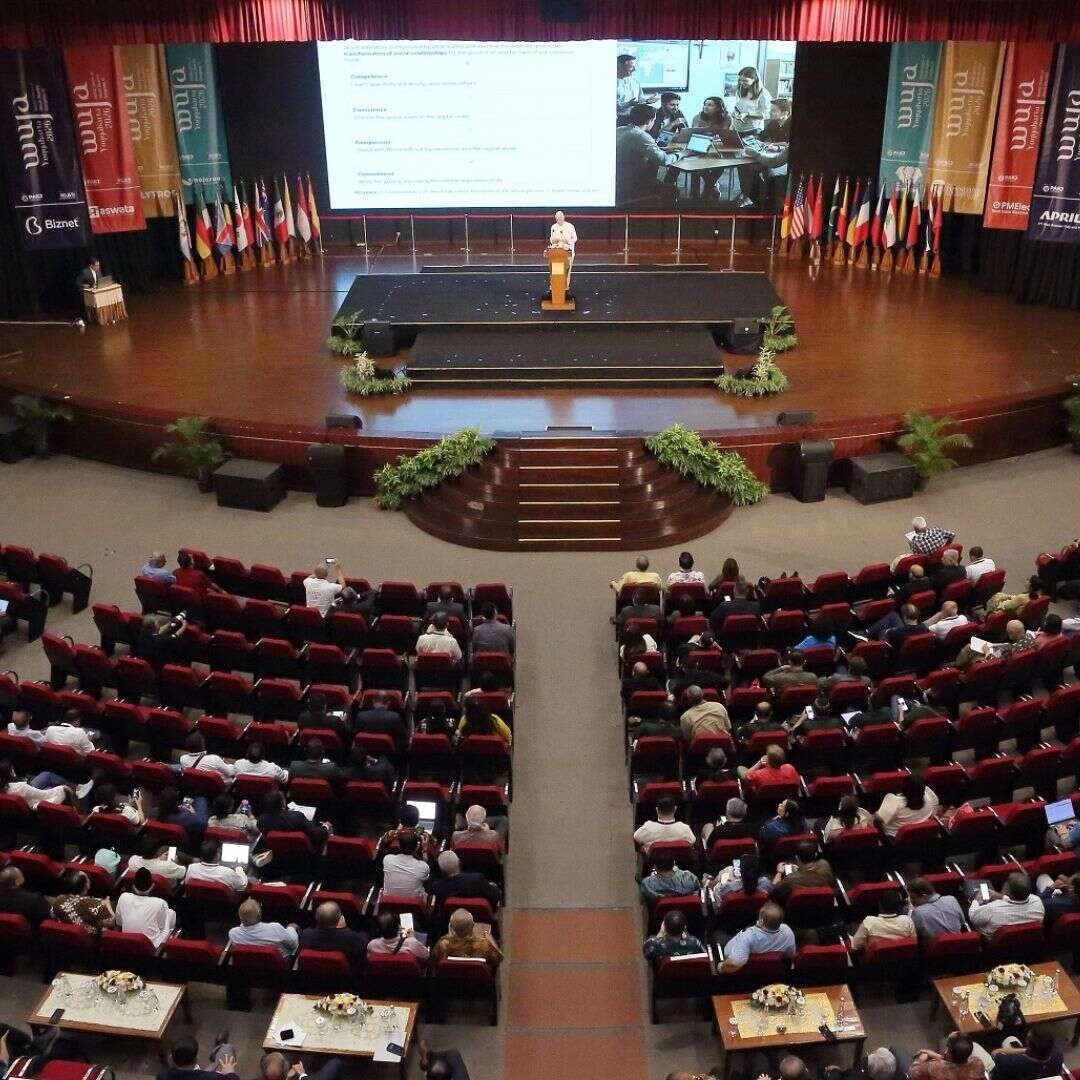
Throughout the five-day Congress, inspiring speakers and Jesuit alumni shared their experiences and reflected on what it means to be a Jesuit alumnus in today’s world—a world deeply affected by corruption, wars, natural disasters, hunger, poverty, unemployment, inequality, and many other challenges. The theme of the Congress, “United in Spirit, Leading with Purpose,” served as an invitation for Jesuit alumni to come together, listen to one another, reflect on our shared identity, and consider how we can contribute more meaningfully to the world around us.
As a Jesuit alumnus myself, having graduated from Ateneo de Manila University in the Philippines, I felt very blessed to receive the opportunity from Fr. Erik John Gerilla, SJ, Regional Superior of the Jesuits in Timor-Leste, to participate in WUJA together with other Jesuit alumni. A group of us from Timor-Leste travelled to Yogyakarta on 28 July and returned home on 4 August.
This was my first participation in WUJA, and, to be honest, I had never heard much about WUJA before. As I joined the Congress, I felt both excited and overwhelmed by the scale of the gathering and by the many new experiences and insights that were shared. I was particularly inspired by the stories of Jesuit alumni from different countries and backgrounds. Their experiences made me reflect more deeply on my own identity as a Jesuit alumnus and on what it means to carry Jesuit values beyond the walls of a Jesuit school.
The experience was especially meaningful and memorable for me because it gave me the opportunity not only to learn through talks, reflections, and activities, but also to meet and connect with Jesuits and former Jesuits, companions, and fellow alumni from different parts of the world. These encounters broadened my understanding of community and deepened my appreciation of our shared mission, spirituality, and commitment to serving others.
At the same time, the experience left me with many questions. Where do these Jesuit alumni find the courage and strength to bring God closer to others? Where do they find God in all things? How do they experience God in their everyday lives? Their stories reminded me that Jesuit spirituality is not something confined to a classroom, a retreat, or a church. Rather, it can be lived through our daily choices, our relationships with others, our professional responsibilities, and our commitment to those who are most in need.
For me, WUJA was an enriching experience of listening, learning, observing, and witnessing how Jesuit values are lived out in the lives of our alumni. I encountered people who were using their professions, talents and resources, to serve others and contribute to positive change in their communities. Their examples reminded me that Jesuit education is not only about academic knowledge or professional achievement. It is also about formation of the person and about becoming a person for and with others.
Many words and phrases I often heard during the Congress, support this insight:
- Solidarity and fellowship
- Partners and companions in the mission of God
- Graduation is not the end of Jesuit education; it continues beyond graduation
- Sharing in unity
- Different gifts, but one Spirit
- Because of Jesuit values and spirituality
- Universal Apostolic Preferences
- Encounters change people
- Commitment and compassion
There were many other inspiring words and messages throughout the Congress that lead me to ask myself: What do they mean for me as a Jesuit alumnus? How can I translate them into the way I live and serve? Can a Jesuit alumnus continue to grow amidst the temptations, chaos, conflicts, and uncertainties of today’s world?
I agree that we cannot fully understand the meaning of Jesuit education if we see it as something that ends at graduation. Graduation is not the end of Jesuit education; it is the beginning of a different kind of responsibility. What we have received through Jesuit education is meant to accompany us throughout our lives and to be shared through the way we live, work, serve, and relate to others.
WUJA in Yogyakarta encouraged me to become more open and freer in my daily work and activities—to allow God’s grace to guide me and to continue seeking opportunities to serve God and others for the greater glory of God. More importantly, it encouraged me to reflect more deeply on my identity as a Jesuit alumnus and to ask myself: What more can I do to bring change and transformation to the lives of people in Timor-Leste?
I do not yet have a complete answer. Perhaps I am not expected to have one immediately. What matters is that the question continues to accompany me. It challenges me to look beyond my own responsibilities and comfort, to recognize the needs of others, and to consider how my knowledge, experience, and talents can be placed at the service of others.
I am grateful to have met so many Jesuit alumni who continue to live out the Jesuit values of faith, justice, solidarity, commitment, and compassion. I was inspired to see how the values and spirituality they received through Jesuit education continue to shape their lives and motivate them to contribute to the transformation of others and of society.
For me, therefore, WUJA was more than a gathering of Jesuit alumni. It was an encounter—a space where people, stories, faith, experiences, and dreams came together. And, as I learned during the Congress, encounters can change people.
I returned from Yogyakarta with more than memories of a five-day Congress. I returned with new questions, renewed inspiration, and a deeper awareness of what it means to be a Jesuit alumnus. I may not yet know exactly where this journey will lead me, but I hope to continue walking it with openness, humility, faith, and a willingness to serve.
Perhaps this is what it means to be a Jesuit alumnus: not simply to remember where we graduated from, but to remember what we were formed for—and to continue asking how we can use what we have received to serve God and others, especially those who need us most, for the greater glory of God.
Note: my sincere gratitude to the Jesuit alumni and Sanata Dharma University in Indonesia, together with the Jesuit priests and brothers, for their great efforts in organizing the 11th WUJA Congress and caring for all the participants. Their warm hospitality, generosity, and kindness were truly remarkable. From our arrival until our departure, we felt welcomed and well cared for. Their service made the Congress even more meaningful and memorable.
Written by João dos Santos