What happens when communities begin to take the lead in addressing their own health challenges?
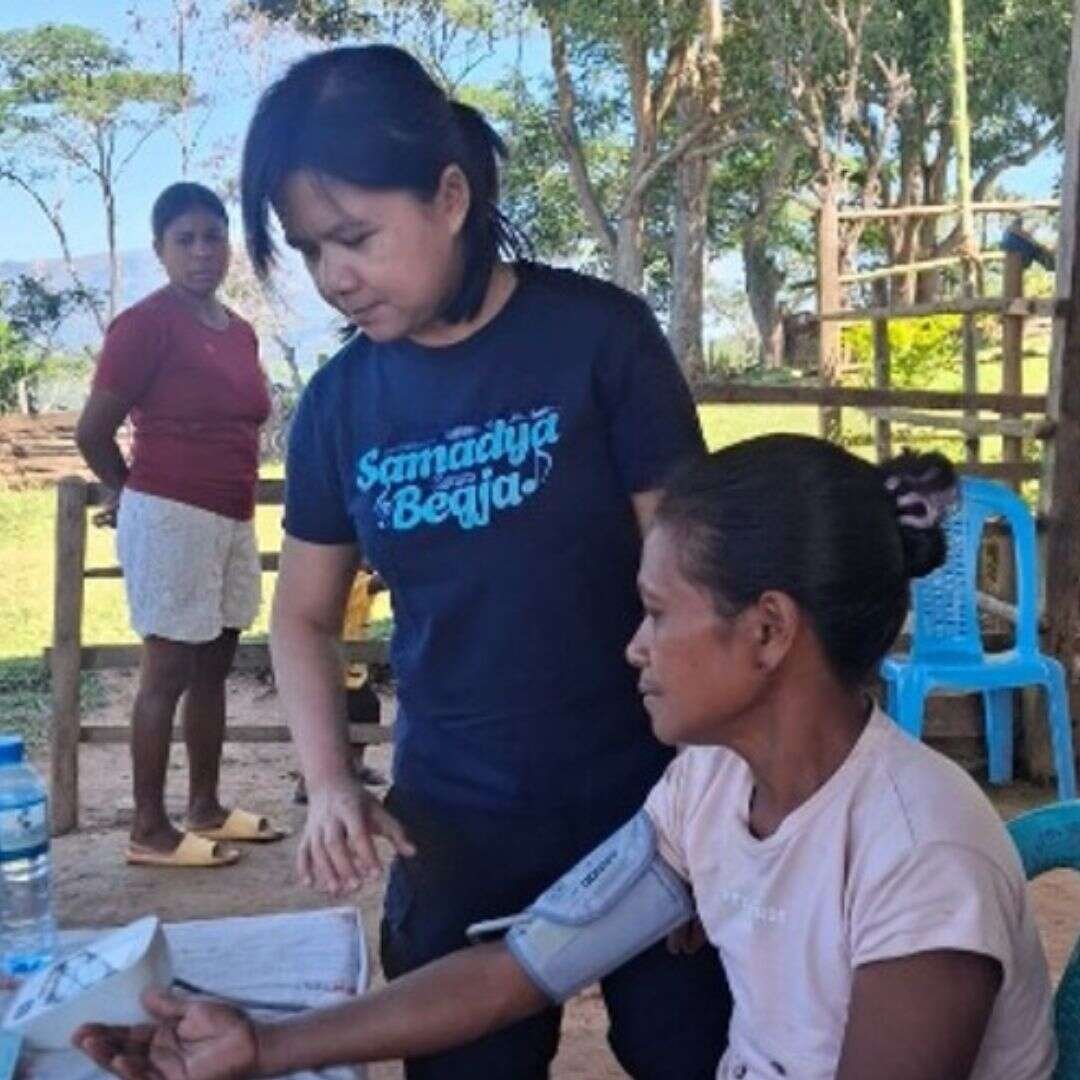
For Herlin, a Medical Ambassador International (MAI) volunteer working with the Centro Saude Duarte Orlando (CSDO). Team in Timor-Leste, the answer to this question has become clearer during her one-month experience of supporting the Community Health Education (CHE) program, and through her involvement in community engagement, health screening follow-ups, and the First 1,000 Days of Life Program. Her work has brought her into contact with several communities, including Lanumate, Maubara Ulun, and Fatuklana.
CHE is more than simply sharing information about health. It combines health education, disease prevention, and community empowerment. Its goal is to help communities understand their own health challenges and take an active role in finding sustainable solutions.
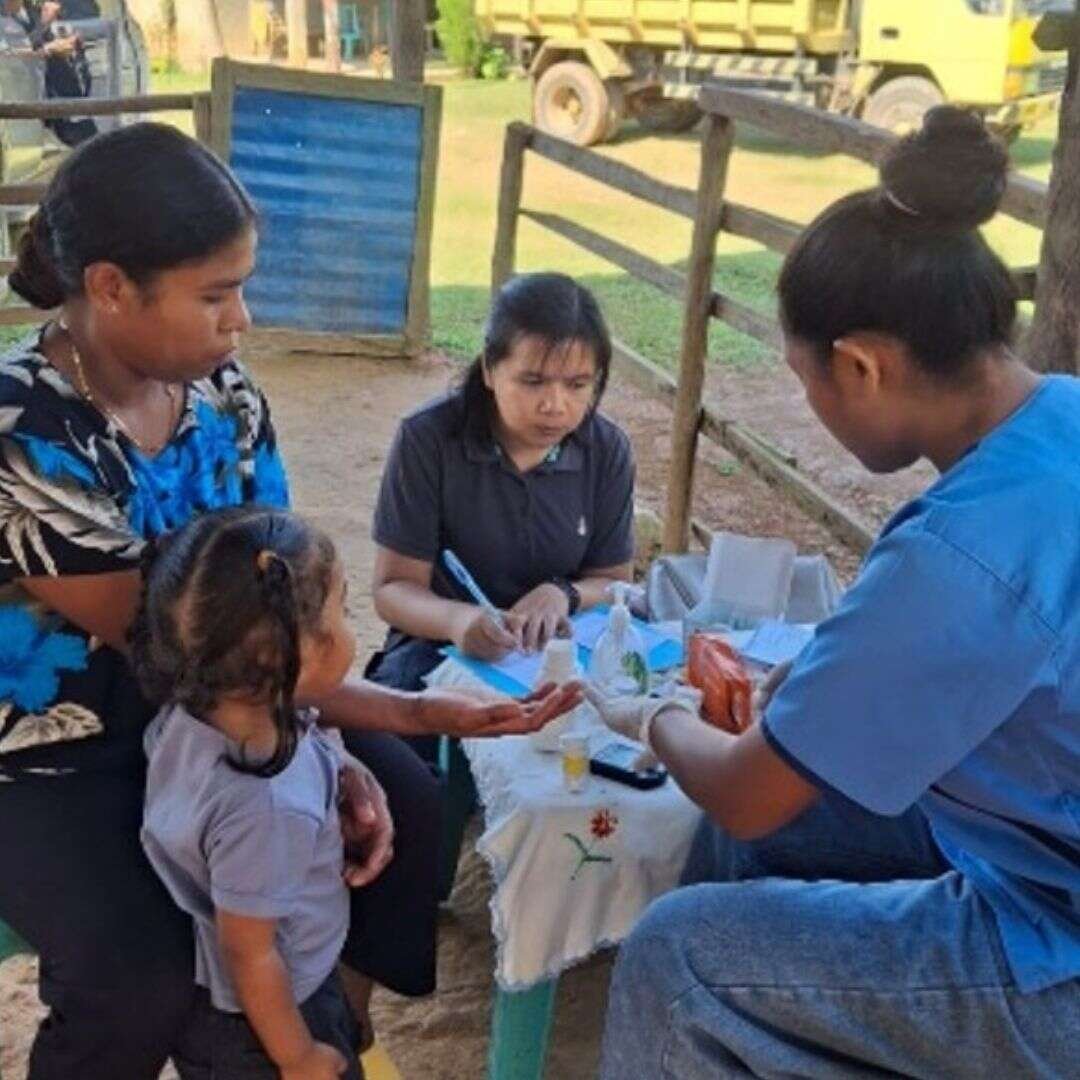
Image: Herlin is the one writing notes assist the CSDO team.
During her time with CSDO, Herlin has also supported health screening and result-sharing activities. She has also accompanied the team in facilitating Seed Projects with communities.
Through these projects, Herlin and the CSDO Team assist communities in planning, executing, and evaluating small-scale projects after community members identify health problems existing in their own communities. She has also supported the First 1,000 Days of Life Program through offering learning materials and health promotion activities with Government Clinics.
But, beyond these activities, one of the most meaningful things she has observed is the growing ownership of these initiatives by the communities, which she describes as a shift in the way communities participate in health promotion.
Instead of the CSDO Team always leading the activities, community members are increasingly choosing the health topics they want to learn about, selecting coordinators, participating in planning and simple budgeting, and deciding what they can contribute to their own projects. It is like they are planting their own local seed.
The communities have also learned to evaluate their activities and make changes when needed. One example was the incorporation of a hypertension exercise activity into a more structured hypertension workshop. As a result, local leaders are also becoming more confident in leading discussions within their communities.
Herlin observes, “Sustainable change takes time, patience, and true partnership.” For her, these changes demonstrate what community empowerment can look like in practice.
However, despite the progress made, some challenges remain. Reflecting on her time with the CSDO team, Herlin shared that she believes that more support is still needed: “I think we need stronger follow-up and mentoring.” She also highlighted the need for better access to educational materials that fit our local context, as well as improved systems to monitor and evaluate progress over time. “When I look back on my experience,” she said, “I see how far we’ve come, but also where we still need to grow.”
These challenges also point to what comes next. CSDO and the communities are continuing with Seed Project activities, health workshops, the First 1,000 Days Program, and efforts to strengthen local community leaders and trainers who can become “Champions” of community health initiatives.
Looking ahead, Herlin hopes to see stronger community participation, greater independence in local health planning, and closer collaboration between community-led initiatives and formal healthcare services.
Her vision is simple but important: families in both rural and urban communities should have access to quality health knowledge, basic care, and dignifying support.
For Herlin, “good health begins at home.” That is the goal of sustainable health improvement: it happens when communities are not simply recipients of support, but active partners in creating change.
Written by: Prícilia da Costa Freitas (JSS Communication Officer)