
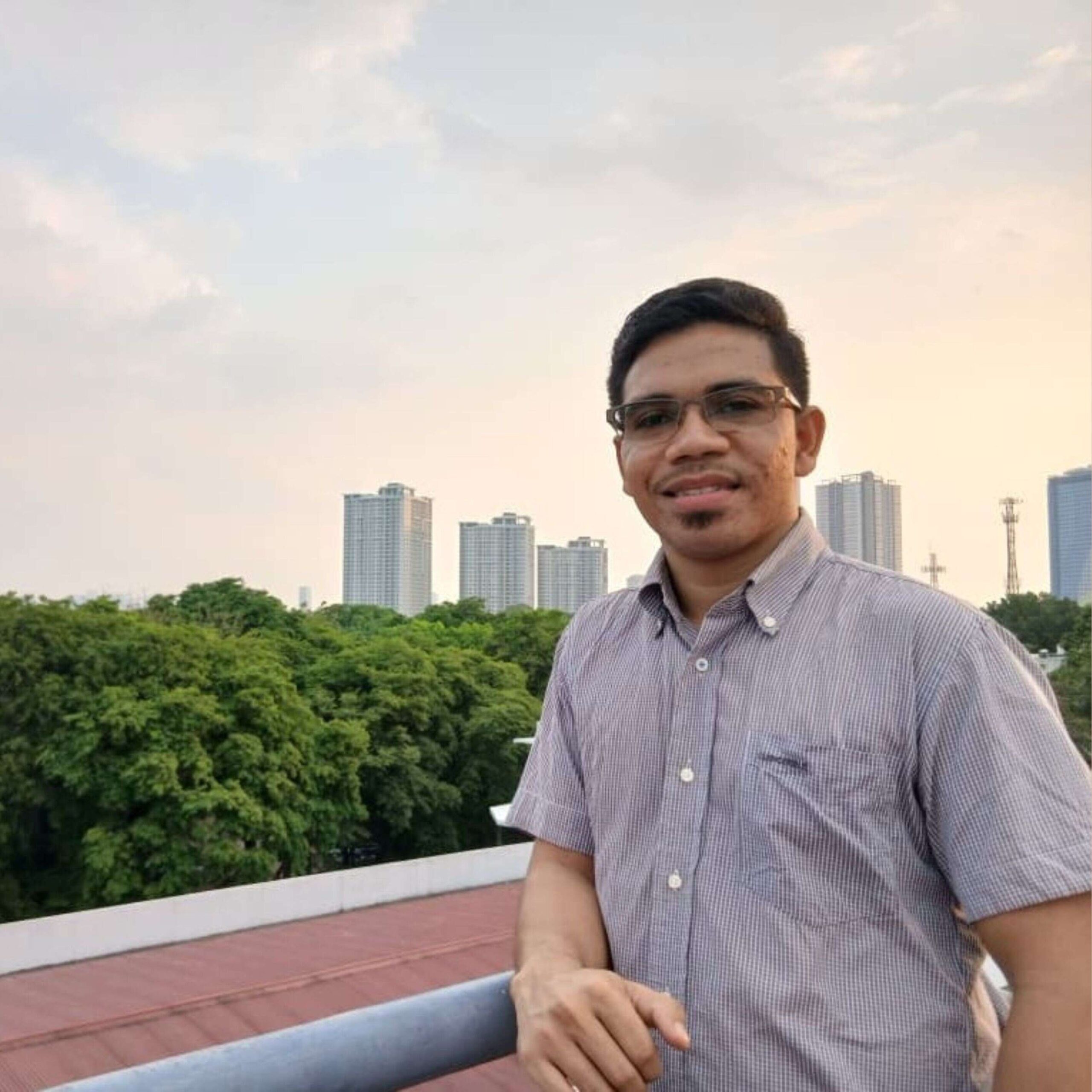
After finishing my Novitiate—a special time of deeper reflection and solitude—and taking my Jesuit vows, I began a new chapter in my life as a Jesuit Scholastic. I stayed for a few months at our Jesuit residence in Taibesi, Dili and studied some subjects at Instituto São João de Brito (ISBJ) before coming to Manila, Philippines, to join the Juniorate program. I left East Timor on 29 January 2026 and arrived in Manila the following day.
Looking back at the last few months, I realize now that this journey has opened my eyes to new possibilities in life as a young Jesuit. Living in the Philippines for ongoing Jesuit formation is more than a change of place, it is a journey of the heart. For me, transition is never easy. But in this case, it has meant leaving behind familiar rhythms, environment, language, and expectations. Yet, I can see that within these challenges lies the seed of resilience, a grace that allows me to grow spiritually and personally in the midst of trials.
Personally, the first challenge for me in this time of transition has been facing the unfamiliar: the climate, the food, the pace of life—all these have demanded adjustment. Sometimes, the heat feels overwhelming; at others, the daily commute tests patience. Yet, each moment becomes a lesson in humility. They remind me that Jesuit formation is not about comfort but about learning to find God in all things. Moreover, resilience here is not stubborn endurance, but a gentle openness to be reshaped by reality.
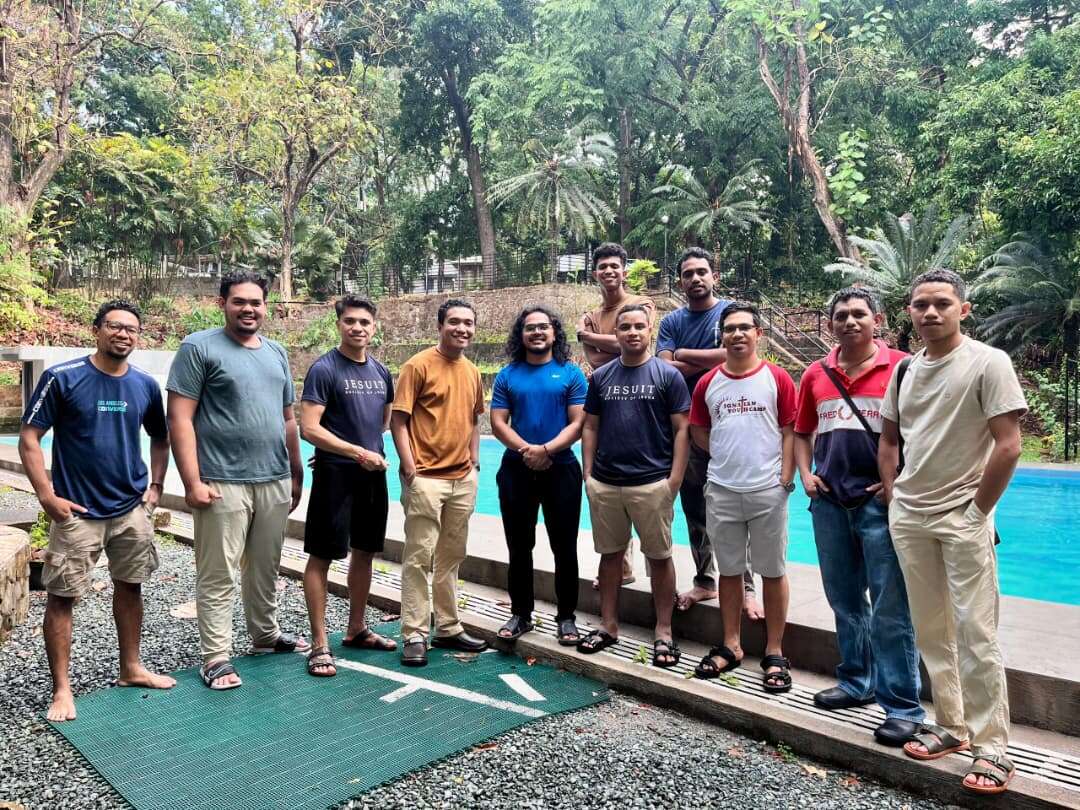
Photo: Leolino in a white t-shirt with Timorese Jesuit’s Scholastics in Manila.
Learning new languages has also been a challenge, as I am currently struggling with English and Tagalog, the Filipino local dialect. Yet, reflection has also helped me understand that language learning, though not easy, depends on how humble people are in order to learn. I feel that this learning is about more than simply acquiring new words. It is about entering into the lives of others. Misunderstandings bring laughter, but additionally they teach me humility. To listen carefully, to speak slowly, and to accept mistakes—these are important lessons that I am also learning. Though they test my patience and deepen my sense of vulnerability, I have also realised that as part of our Jesuit formation, this vulnerability is not weakness but strength, because it opens our heart to communion and empathy.
My life here in Philippines, Ateneo de Manila, particulary at Loyola House of Studies is indeed a time of transition, as I adjust to community life, communal meals and a new rhythm of spiritual life in the midst of increased busyness. But I am also realizing that resilience is found in belonging and that transition is not isolation; it is integration. Spiritually, resilience in transition means trusting in God in weakness, and this has also taught me that fragility is fertile ground for grace and growth. Each adjustment, whether big or small, becomes a moment of discernment, a chance to ask: Why is God leading me here? In this way, transition becomes a pilgrimage, shaping my heart to be available for God’s calling to respond to the greatest need.
In short, I would like to conclude my reflection with these words; resilience in transition is not simply survival—it is transformation. Adapting to new environments, languages, and expectations, teaches me to grow in humility, patience, and courage. It becomes a living in spiritual freedom, service and hope. And through this journey, I am learning that resilience is not about holding on tightly, but about letting go so that God may lead me more freely into the joy of mission.
Written by:
Sch. Leolino Alves Madeira Barros, SJ