
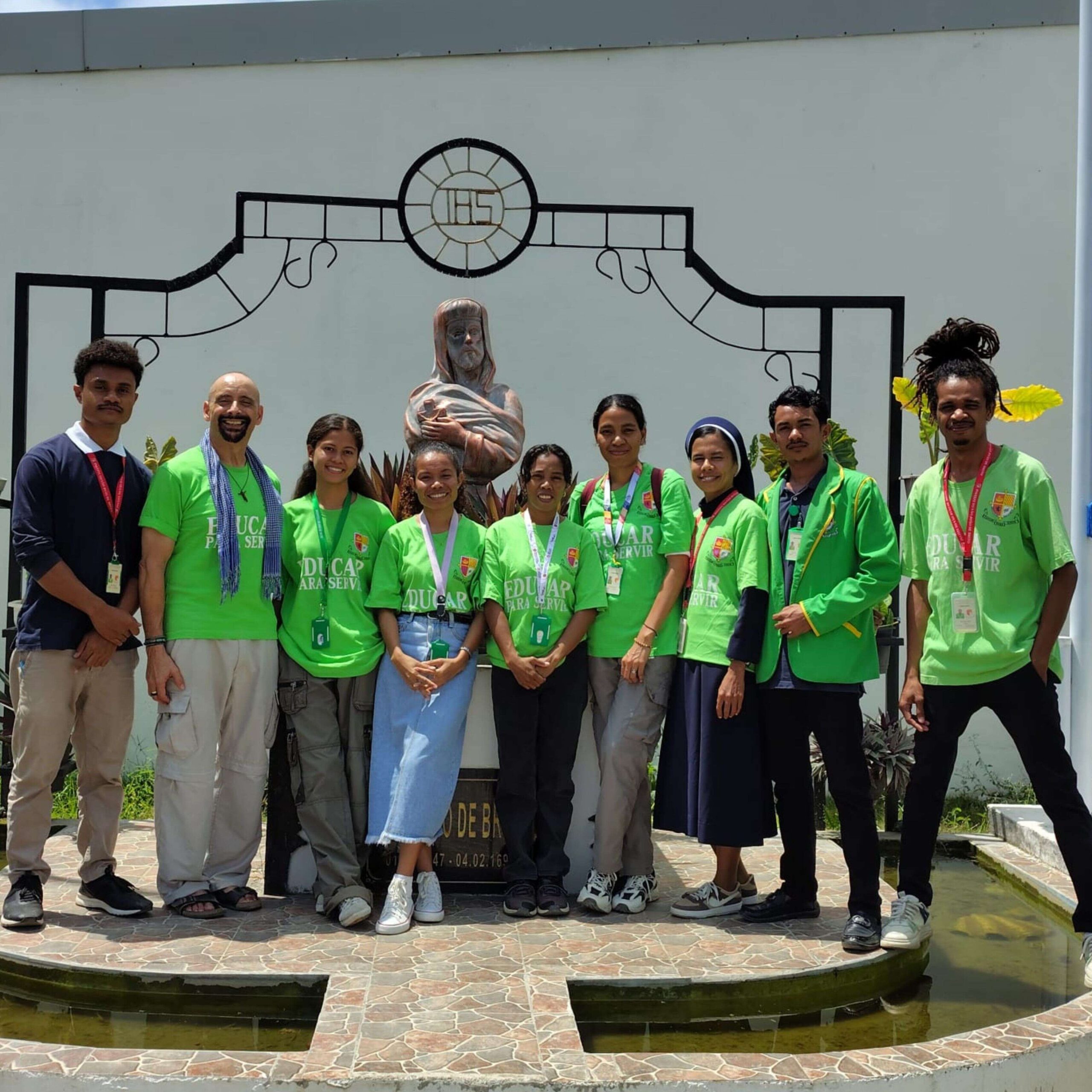
Extracurricular activities and clubs in Jesuit institutions are grounded in the tradition of forming the whole person—intellectually, socially, morally, and spiritually. Inspired by the educational vision of Saint Ignatius of Loyola, Jesuit education emphasizes cura personalis or care for the whole person. This means that learning is not confined to academic endeavours alone but extends to character formation, leadership, service, and personal growth. Clubs, sports, arts, and service groups provide students with opportunities to discover their talents, develop confidence, and build meaningful relationships, all of which contribute to a more complete and balanced education.
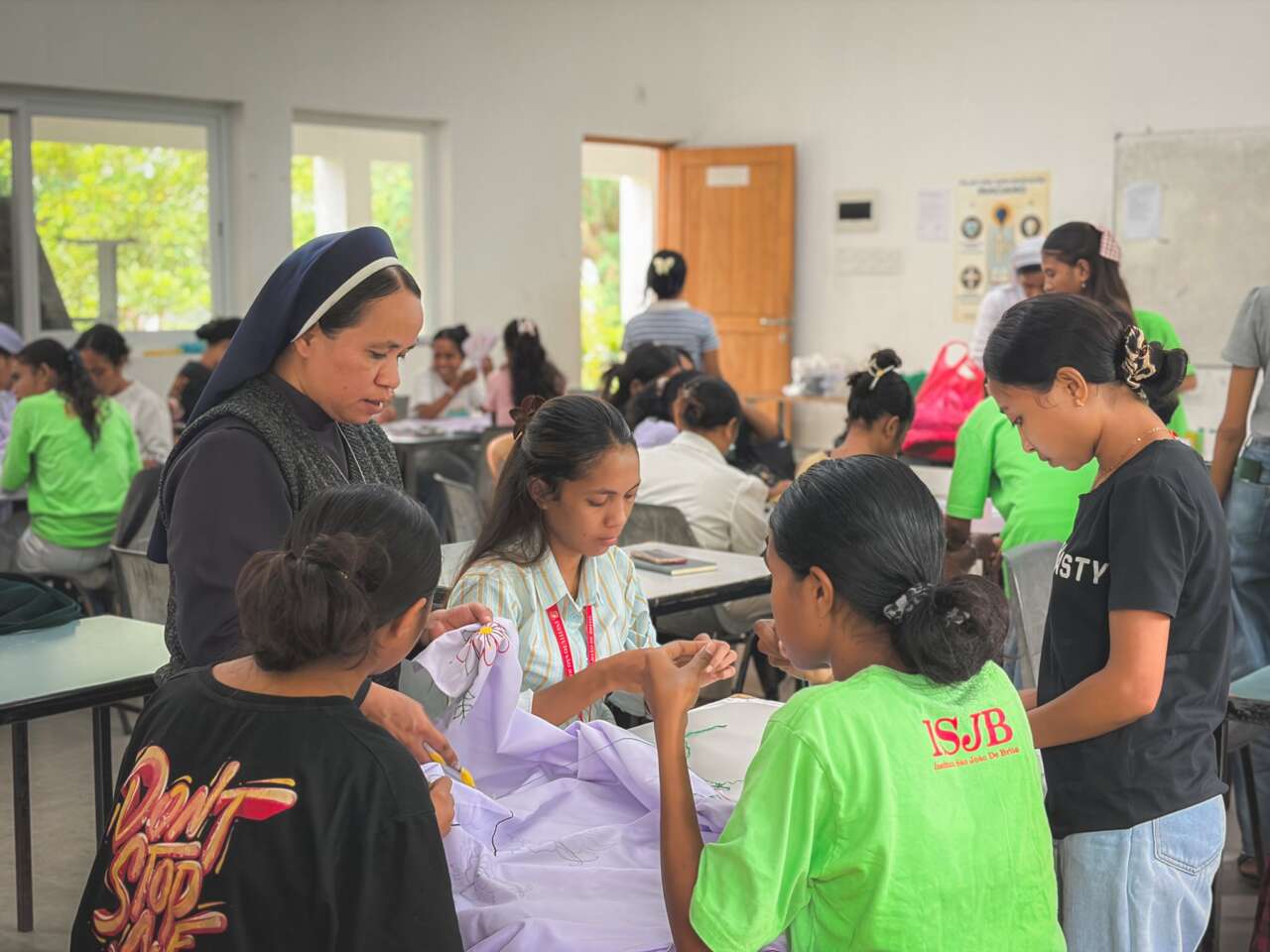
Photo: Students at ISJB’s corner tailoring traditional DIY.
At the same time, extracurricular activities can serve as a bridge between theory and practice, allowing students to apply what they learn in the classroom to real-life situations—whether through debate clubs that sharpen critical thinking, art and music clubs that encourage artistic expression, or service groups that foster a commitment to justice and compassion. In this way, Jesuit schools promote not only academic excellence but also the formation of “men and women for others,” preparing students to engage thoughtfully and responsibly with the world around them.
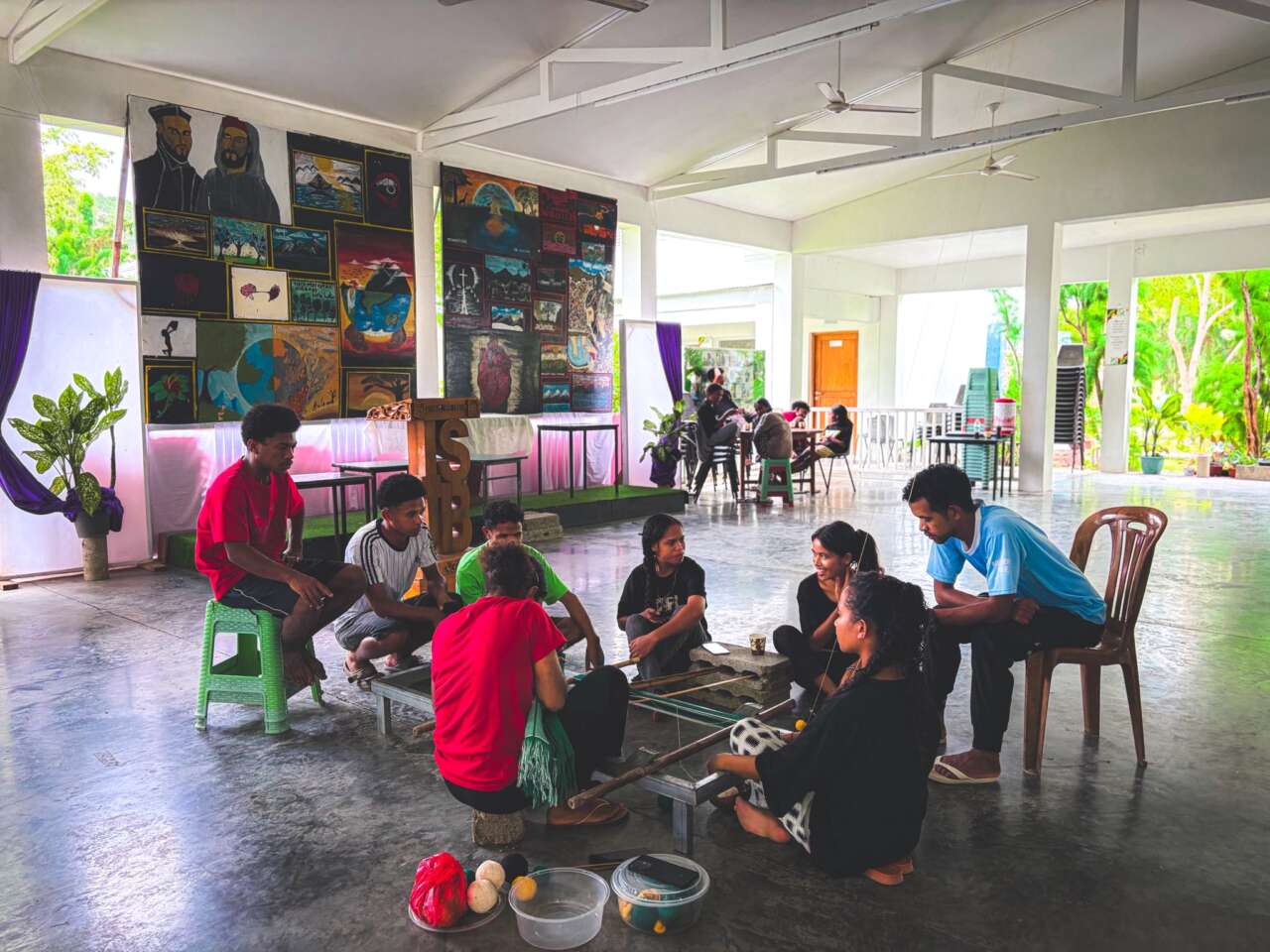
Photo: Practising the traditional handmade Tais of Timor-Leste.
Following this Jesuit tradition, over the last few years, Instituto São João de Brito (ISJB) in Kasait has been offering extracurricular activities to its students on Friday afternoons, through a variety of clubs including debating, media, English language, arts, choir and band, sports, chess and an environmental club.
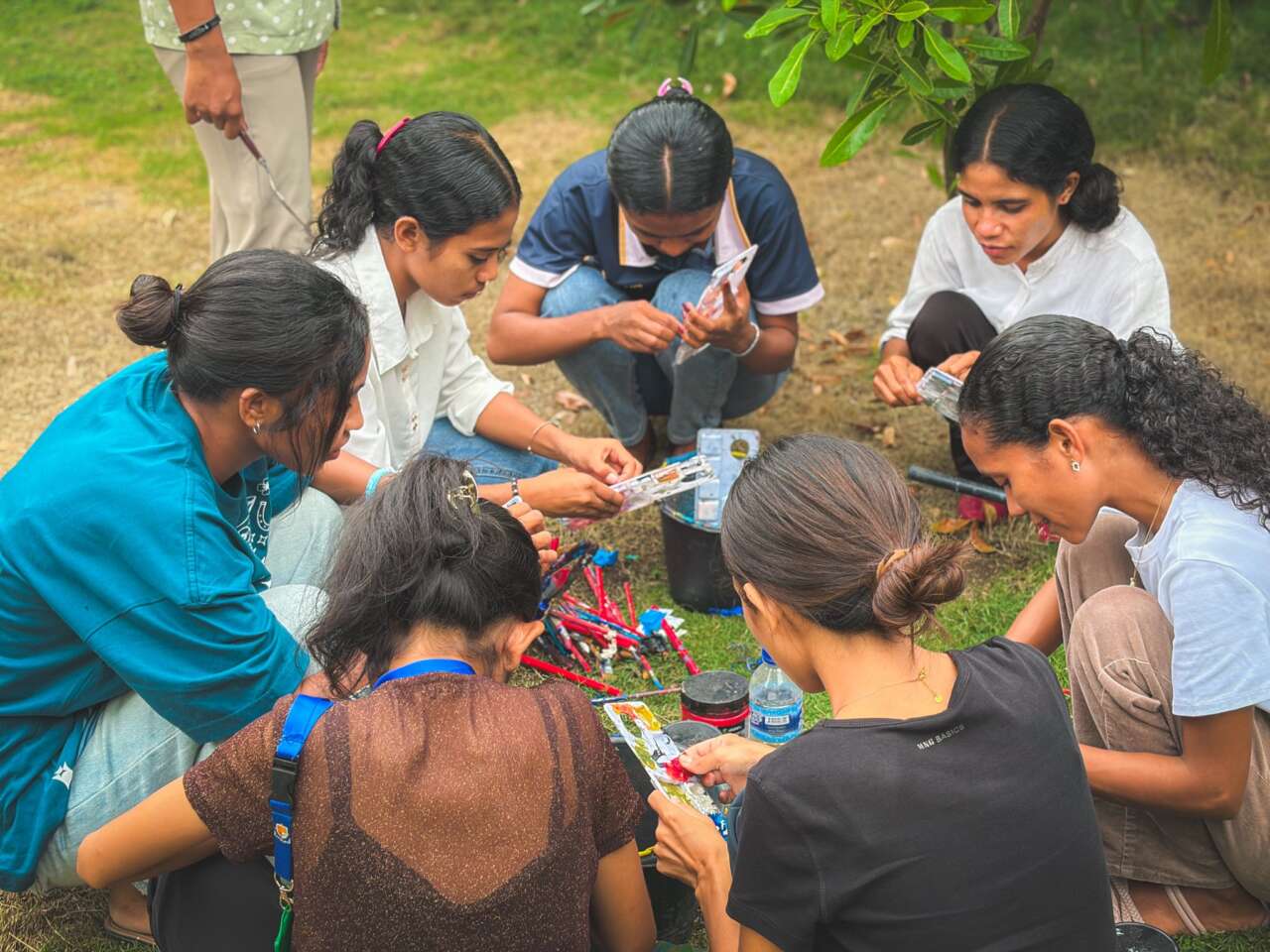
Photo: A group of students prepare a material for a painting activity.
In August 2025, the Instituto welcomed its latest addition to this program, launching its English Journal (newspaper) Club. Although the initiative had been envisioned for some time, it had not materialized because of limited staff resources. Fortunately, one of the Jesuits in the staff, Fr Sacha Bermudez-Goldman, SJ, became available and now functions as the club’s facilitator. “This initiative aims to strengthen students’ English language skills—particularly in writing, speaking, and listening—while also developing essential competencies such as editing, research, critical thinking, teamwork, and time management, which are transferable to both academic and professional settings,” explained Fr. Sacha.
From its early stages, the club attracted students like Leonela Francisca Tilman, who was among the first to join. “The English Journal Club drew my attention because my major is in the English Department,” she shared. Leonela saw the club as an opportunity to enhance her language and academic skills “while also strengthening my critical thinking capacity along the way”, she added.
This semester, second-year English student Domingos also joined the club, inspired by its growing achievements. “I wanted to participate in the English Journal Club to become more confident when speaking English with friends and teachers,” he said.
The English Journal Club serves as a platform for students to express their opinions, share ideas, and showcase their creativity. Appropriately, the students chose to name their journal, the ‘ISJB Voice’. Its vision reflects a deeper purpose: “Inspired and guided by Gospel values and the Ignatian Pedagogical tradition, our small ISJB Voice English journal seeks to inspire, inform, and unite our Instituto community by providing a trusted platform for student voices, celebrating our achievements, and encouraging thoughtful dialogue through honest, creative, and responsible journalism,” wrote Fr. Sacha, SJ.
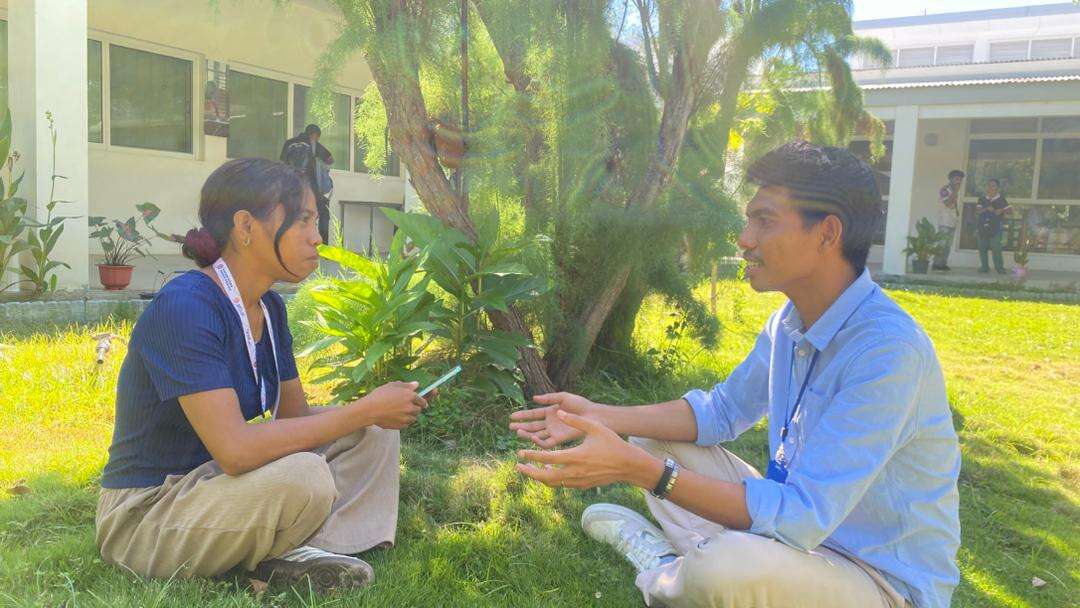
Photo: Leonela is interviewing one of the students at ISJB for the English Newspaper “ISJB Voice”.
Reflecting on her experience, Leonela recalled the club’s initial goal: “From the beginning, our target was to publish two editions of the journal per semester.” She contributed actively, writing three articles for the first publication, covering topics such as mental health, social services supporting ISJB students, and experiences in extracurricular activities.
She expressed pride in the team’s accomplishment: working collaboratively with fellow members and under the guidance of Fr. Sacha, they successfully achieved their publication goals.
Domingos also shared his early experience in the club. “During our first three weeks, we did not engage in journalistic activities such as interviews or writing,” he explained. “Instead, we focused on training sessions, where we learned journalism skills such as research, article writing, identifying issues, and conducting interviews.” Now, having completed his training, he has begun applying what he has learned.
To date, the English Journal Club has published two editions of ISJB Voice. The first featured nine articles, while the second expanded to twenty. The third edition is scheduled for release at the end of this month.
Domingos is eager to contribute further, particularly through conducting interviews and writing. “I have observed that many people can speak well, but struggle to express their ideas in writing. I am part of this community, and I want to improve my writing skills so I can produce meaningful articles focused on ISJB and beyond,” he said.
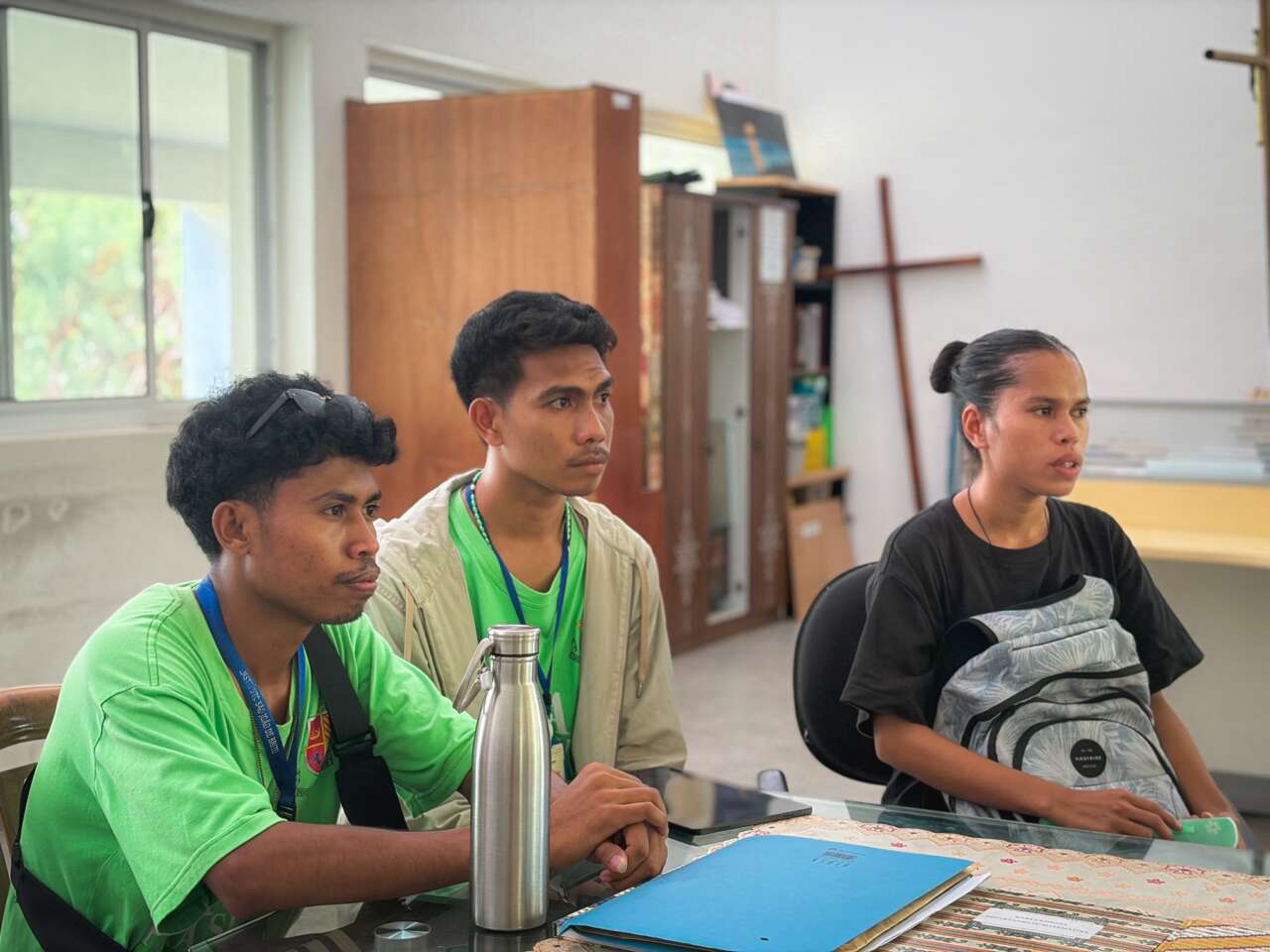
Photo: Domingos, wearing a green t-shirt (from left to right), participates in a group discussion.
Both Leonela and Domingos expressed their hopes for the future of the club. They believe it will continue to grow and positively impact more students through its publications. Beyond skills development, the club has also strengthened relationships within the ISJB community. “It helps build connections among students, teachers, and staff. Through shared stories, everyone is encouraged to contribute to make ISJB a more inclusive educational institution where everyone feels that their voice is important,” they reflected.
Written by:
Iriana Soares, ETR Communications Officer